Food & Sake— autumn
The Rice Farmers of Yamagata: Why This Region Grows Japan's Finest Grain
June 9, 2026
Yamagata grows some of the most prized rice in Japan. A look at the Shonai plain, the snowmelt and climate behind the grain, the celebrated varieties, and the food culture built around rice.
In Japan, rice is not a commodity. It is graded, ranked, branded, and discussed with the seriousness other countries reserve for wine, and the regions that grow the best of it carry real prestige. Yamagata is one of those regions. Its rice consistently earns the highest national ratings, and the grain it produces is sought out by chefs and households across the country.
Behind that reputation lies a specific landscape — the Shonai plain on the Sea of Japan coast — and a set of conditions that other regions cannot easily replicate. To understand Yamagata's rice is to understand a good deal about the prefecture itself.
The Shonai Plain
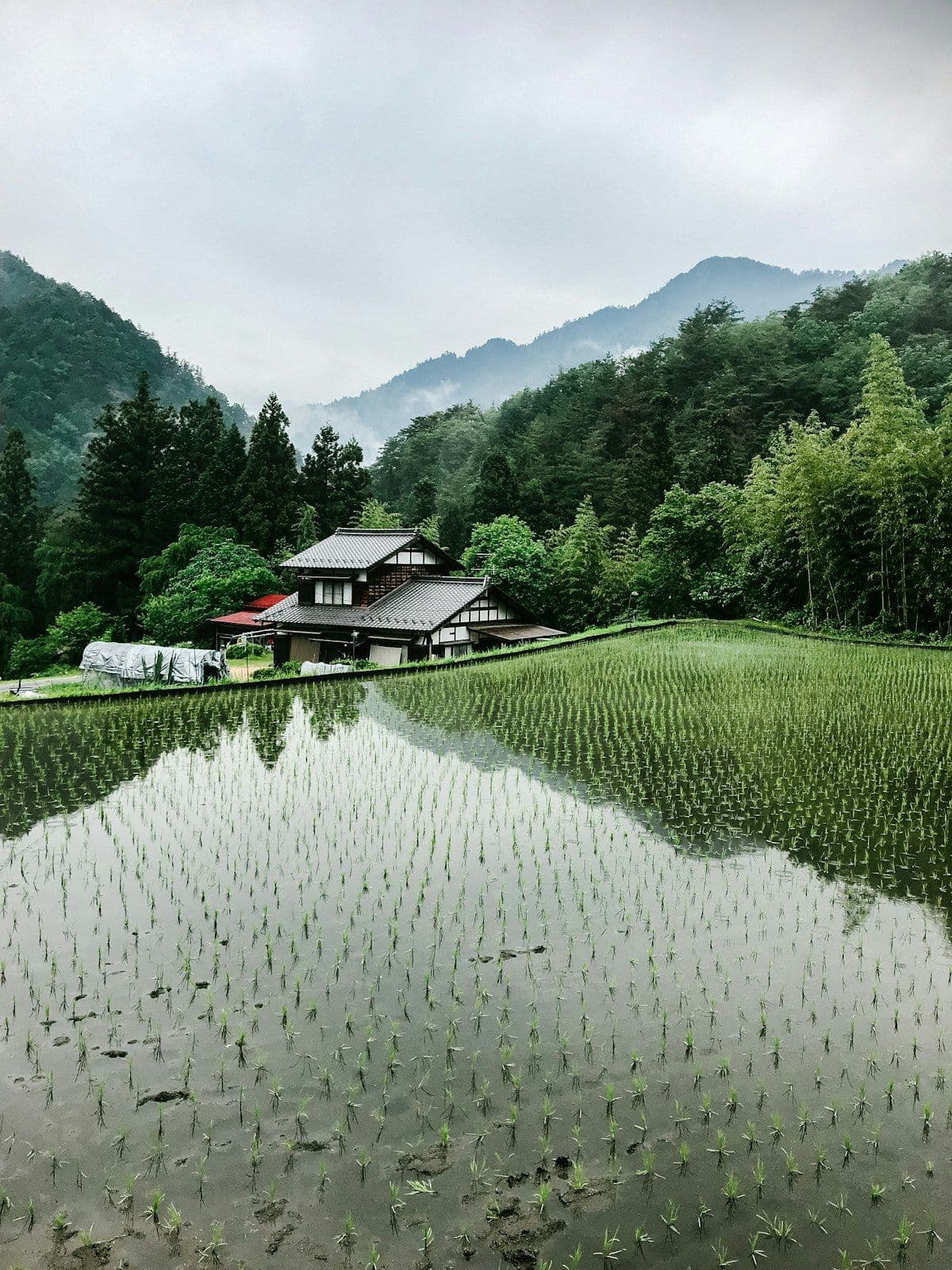
The Shonai plain is a flat expanse of paddy fields on Yamagata's coastal side, framed by the sacred mountains of Dewa Sanzan to the east and the Sea of Japan to the west. It is one of the foremost rice-producing areas in the country, and in late summer the whole plain turns to a sea of green that ripens to gold by the September and October harvest. The flatness, the water, and the long daylight of the northern summer combine into near-ideal growing conditions.
What sets the region apart is its water. The heavy winter snows of the Dewa mountains melt slowly through spring and summer, feeding the paddies with cold, mineral-rich meltwater. Warm, sunny summer days and cool nights — a wide daily temperature swing — encourage the plant to store starch and sugar in the grain. The result is rice with a fullness and sweetness that the growing conditions, more than any single technique, make possible.
The Varieties That Made the Name
Yamagata is best known for two rice varieties. Haenuki, developed in the prefecture, became famous for placing at the top of national taste rankings year after year — a workhorse table rice of unusual quality. Tsuyahime, a newer premium variety whose name means "shining princess," was bred for size, whiteness, and a clean sweetness, and is positioned as one of the finest branded rices in Japan.
Food & Sake
What to Eat in Tohoku: The 12 Dishes That Define the Region
Tohoku's food is the most distinct in Japan — shaped by altitude, cold, and isolation. These are the 12 dishes that define the region.
These names matter to Japanese consumers in the way grape varieties matter elsewhere. A bag of Yamagata Tsuyahime commands a premium, and the prefecture has built a genuine agricultural brand around its grain — one of the quieter but most economically important parts of its identity.
A Food Culture Built on Rice
Great rice shapes a region's table. Yamagata's most beloved communal dish, imoni — a hearty taro and beef hotpot cooked outdoors by riverbanks each autumn — is, at heart, a celebration of the harvest season, eaten with bowls of the new-crop rice. The prefecture's sake, too, depends on its rice and water; Yamagata is one of Japan's most respected sake regions, and the link between fine eating rice and fine brewing rice runs deep here.
Even the everyday expressions of the culture revolve around the grain: freshly cooked new-harvest rice (shinmai) in autumn is treated as a seasonal delicacy, served plain so its quality can be tasted directly, the way a fine ingredient should be.
Visiting Rice Country
For travellers, the Shonai plain and its rice culture are most rewarding in late summer and autumn, when the fields ripen and the harvest comes in. The cities of Tsuruoka and Sakata anchor the region, both reachable by train, and both make good bases for exploring a landscape of paddies, old merchant warehouses, and mountain shrines. Some farms and agricultural facilities welcome visitors, and the autumn imoni gatherings along the rivers near Yamagata city are an open, sociable expression of the harvest.
It is not a packaged tourist experience, and that is the appeal. To eat a bowl of new-crop Yamagata rice in the place it was grown, in the season it was harvested, is to taste something that the rankings and brand names only gesture at.
Questions Travelers Ask About Yamagata Rice
Why is Yamagata rice so highly regarded?
Yamagata's Shonai plain combines cold, mineral-rich snowmelt water with warm sunny days and cool nights — ideal rice-growing conditions. Its varieties, especially Tsuyahime and Haenuki, consistently earn top national taste rankings.
What are the famous Yamagata rice varieties?
Haenuki, a high-quality table rice that has topped national rankings, and Tsuyahime, a premium variety prized for its size, whiteness, and clean sweetness. Both are flagship brands of Yamagata agriculture.
When is the best time to visit Yamagata's rice country?
Late summer and autumn, when the Shonai plain ripens from green to gold and the harvest comes in. Autumn is also the season for imoni hotpot gatherings and freshly cooked new-crop rice.