Itinerary— all
Tono: Walking Through Japan's Folklore Heartland
June 18, 2026
Tono is a quiet valley in eastern Iwate where Japanese folklore was first written down. A walk through Tono means tracing kappa, oshirasama, and the magariya farmhouses that gave the Tono Monogatari its enduring shape.
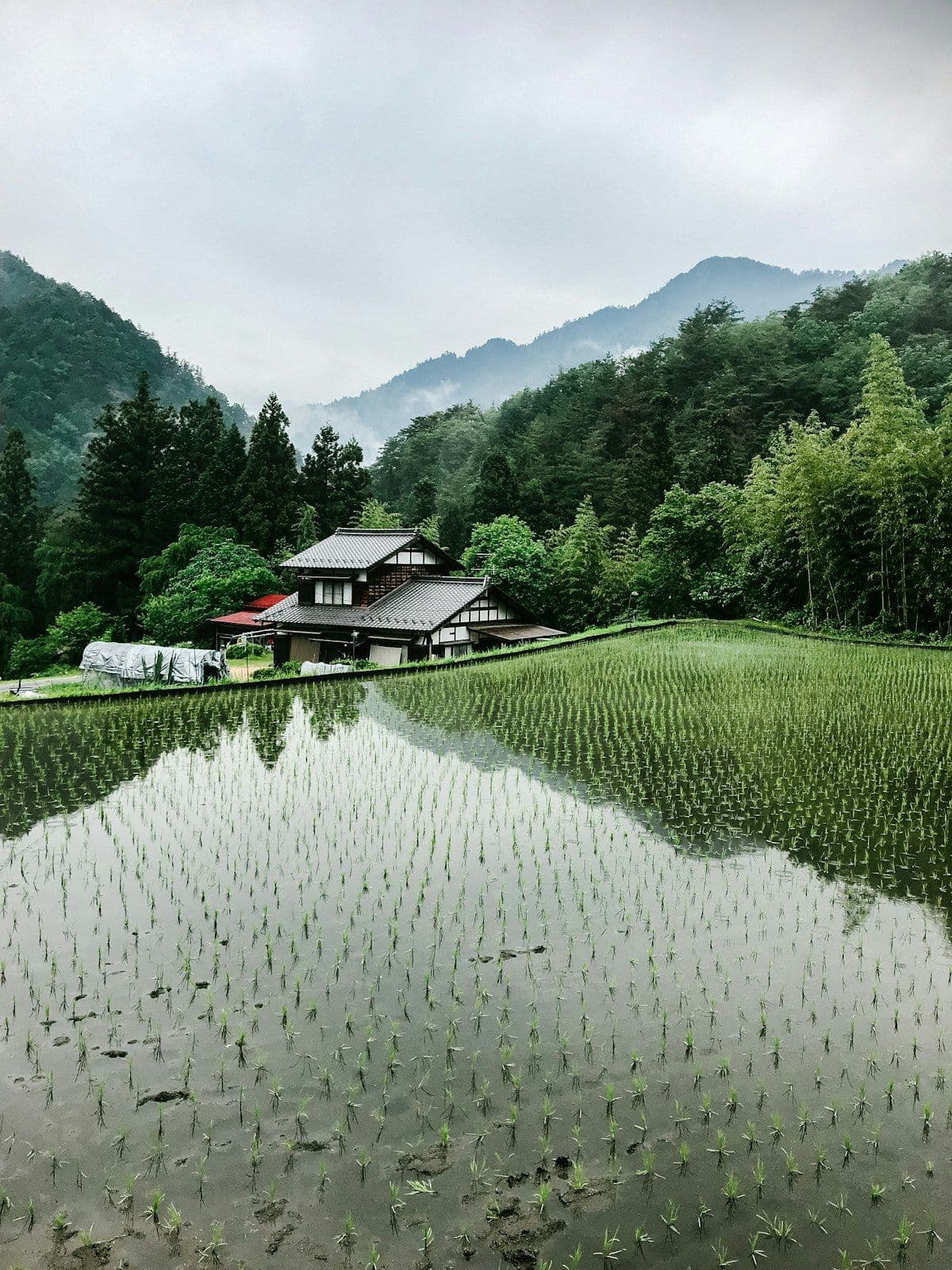
Tono sits in a wide bowl of rice fields ringed by low mountains. It is a working agricultural town, not a museum, and that is precisely why it became the cradle of Japanese folklore studies. Here the line between the everyday and the supernatural was drawn thinly, and for a long time nobody thought to erase it.
In 1910 the ethnographer Kunio Yanagita published the Tono Monogatari, a slim collection of local tales he had transcribed from a young man named Kizen Sasaki, a Tono native and gifted storyteller. The book gathered accounts of water spirits, household gods, mountain women, and the dead who lingered near the living. It is now regarded as the founding text of minzokugaku, the academic study of Japanese folk culture, and it turned this remote valley into a name spoken with reverence by anyone who studies how the country once imagined its own unseen world.
More than a century later, the legends in the Tono Monogatari are not abstractions. Many of them are still attached to specific pools, temples, and farmhouses scattered across the valley, which makes Tono one of the few places in Japan where folklore can be walked rather than only read.
The Tono Monogatari and the Birth of Japanese Folklore
The Tono Monogatari runs to 119 short entries, most no longer than a paragraph. Yanagita resisted the urge to polish them into literature. He recorded what Sasaki told him in plain, often abrupt prose, preserving the matter-of-fact tone in which the people of Tono spoke about the strange things that happened in their fields and forests. That restraint is the book's great achievement. The tales read as reports, not fables, and the reader is left with the unsettling impression that the narrators genuinely expected to be believed.
Yanagita Kunio and Sasaki Kizen
Yanagita was a bureaucrat and intellectual from outside Tono who recognized that Japan's rapid modernization was erasing oral traditions faster than anyone was recording them. Sasaki was the source, a Tono man who carried the valley's stories in memory. The collaboration between the educated compiler and the local teller is itself part of why the work endures. Without Sasaki the tales would have vanished; without Yanagita they would have stayed in the valley. The town today honors both men, and understanding their partnership is the best preparation for a visit.
The Tono Folktale Museum
The Tono Folktale Museum, set in the central part of town, is the natural starting point. It presents the legends through exhibits, recorded storytelling, and material on Yanagita and Sasaki, framing the sites a traveler will later see in the surrounding countryside. Visiting first gives the scattered locations a thread to follow, so that a pool behind a temple or a carving on a riverbank reads as a chapter rather than a curiosity.
Kappa and the Pool at Joken-ji
No creature is more closely tied to Tono than the kappa. In Japanese folklore the kappa is a water spirit, roughly the size of a child, with a beaked face, a turtle-like shell, and a dish-shaped hollow on the crown of its head that must stay filled with water for the creature to keep its strength. Kappa are mischievous and sometimes malevolent. They pull horses and people into rivers, and the Tono Monogatari records several local encounters with them in flat, troubling detail.
Kappabuchi
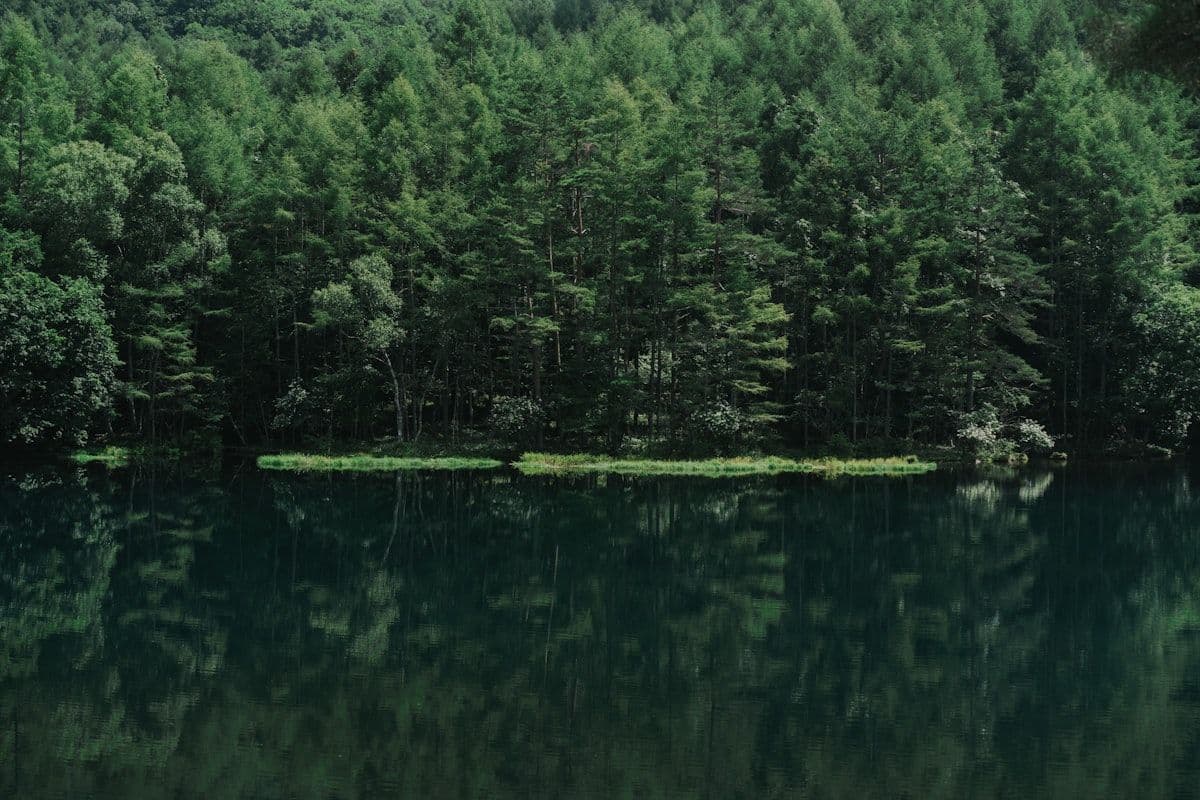
Behind Joken-ji temple, a short walk from the town center, runs a small stream that pools into a shaded spot called Kappabuchi, the kappa pool. Legend holds that kappa once lived here, and the place has the dim, green, slightly eerie quality that such stories tend to attach themselves to. A modest shrine nearby is dedicated to the creatures and was traditionally associated with prayers for the milk of nursing mothers, a reminder of how local belief layered protective and threatening meanings onto the same figure.
Fishing for a Kappa
Visitors to Kappabuchi can buy an inexpensive kappa-catching permit in town and try their luck with a rod baited, by custom, with a cucumber, the kappa's reputed favorite food. It is a light-hearted ritual, and no one expects a catch, but it captures something true about Tono: the legends are treated with affection rather than solemnity, kept alive by play as much as by scholarship. The walk to the pool itself, past rice paddies and old houses, is reason enough to make the trip.
The Magariya Farmhouses
Itinerary
Iwate, Japan: Gold Temples, Three-Noodle Cities, and an Unvisited Pacific Coast
Iwate is Japan's second-largest prefecture by area and one of its least internationally known. It contains a UNESCO World Heritage site, the food culture of Morioka, and a Pacific coastline that most visitors never reach.
The most visible legacy of old Tono is architectural. The magariya is an L-shaped farmhouse in which the main living quarters and the horse stable meet at a right angle under a continuous roof, so that family and animals lived effectively under one roof. The form developed in this part of Iwate, where horse breeding was central to rural life and where harsh winters made it practical to keep valuable animals close and warm. The bend in the building gave the type its name; magari means to bend or turn.
Tono Furusato Village
Tono Furusato Village, in the outlying countryside, gathers several relocated magariya into a recreated old farming hamlet. The thatched roofs, the dark timber interiors blackened by generations of hearth smoke, and the open stable bays make the daily intimacy of people and horses tangible in a way no photograph conveys. Demonstrations of traditional crafts and farm work are sometimes held on site, and the setting among fields and woods preserves the scale at which the legends were originally told.
Denshoen
Denshoen, a heritage park closer to the town center, centers on a preserved magariya and serves as a living archive of Tono's domestic culture. It is also closely associated with the oshirasama tradition, which makes it a useful pairing with a visit to Kappabuchi. The park hosts storytelling and craft activities and offers one of the most accessible encounters with the magariya for travelers without a car.
Household Gods and House Spirits
Beyond the rivers and farmhouses, Tono's folklore lived inside the home. Two figures in particular recur in the Tono Monogatari and remain present in the valley's heritage sites: oshirasama and the zashiki-warashi. Both express a belief that the household itself was inhabited by presences that had to be respected, fed, or appeased.
Oshirasama and the Legend of the Girl and the Horse
Oshirasama are household deities, typically a pair of carved sticks dressed in layered cloth, associated with silkworms, agriculture, and the protection of the family. Their origin story is among the strangest and most affecting in the collection. A farmer's daughter fell in love with the family horse. When the father discovered the bond he killed the horse and hung its hide, but the girl clung to the skin and was carried up to the heavens with it, after which silkworms first appeared. The tale binds together sericulture, grief, and the sacredness of the horse in Tono life, and oshirasama figures can be seen at Denshoen, often hung in numbers with strips of cloth added by worshippers.
Zashiki-warashi
The zashiki-warashi is a child-like house spirit that dwells in the inner rooms of a home. Its presence was thought to bring the household prosperity, and its departure was said to foretell the family's decline. Unlike the kappa, the zashiki-warashi is benevolent, even cherished, and stories of its mischief, the sound of small footsteps or a fleeting glimpse of a child where no child should be, carry a tone of fondness. The figure remains one of the better-known exports of Tono folklore within Japan.
Stone, Landscape, and the Thin Boundary
What gives Tono its atmosphere is not any single site but the relationship between the legends and the land. The valley floor is given over to rice, the slopes to forest, and the transitions between them, the edge of a wood, the bank of a stream, the dark interior of a barn, are exactly where the old stories placed their encounters. To walk Tono is to read its geography as the original tellers did.
The Five Hundred Rakan
On a wooded hillside stands the Gohyaku Rakan, the Five Hundred Rakan, a group of small figures carved into natural stones by a local priest in the eighteenth century. The carvings were made to console the souls of those who died in a severe famine, and the rakan, disciples of the Buddha, are scattered among the rocks and moss rather than arranged in formal rows. Many are now worn nearly smooth. The site is quiet and easily missed, and it conveys the valley's long familiarity with hardship and with the dead as plainly as any written tale.
Reading the Valley
Travelers who slow down find that Tono rewards attention. A roadside stone, a torii at the foot of a hill, a pool too still to be ordinary, these are the punctuation of a landscape that was once understood to be populated. The Tono Monogatari did not invent this sensibility; it recorded one that was already fading, and the valley still carries enough of it that an unhurried visitor can feel the boundary the book describes.
Planning a Visit to Tono
Tono lies in eastern Iwate, between the inland city of Hanamaki and the coast at Kamaishi. It is reachable by train but spread out on the ground, so a little planning makes the difference between seeing the town center and seeing the legends.
Getting There and Around
Tono is served by the JR Kamaishi Line. Travelers usually arrive via Shin-Hanamaki, on the Tohoku Shinkansen, or from Morioka, transferring onto the local line for the ride into the valley. The sites, however, are scattered across the countryside, and the rural bus network is limited. A rental car is the most flexible option, and in the warmer months a bicycle suits the flat valley floor well, turning the distances between Kappabuchi, Denshoen, and Furusato Village into part of the experience rather than an obstacle.
Best Seasons
Late spring through autumn is the most comfortable window. Early summer brings flooded, mirror-bright rice paddies; autumn turns the surrounding mountains. Winter in Tono is cold and snowy, which lends the magariya and the folktale sites a stark beauty but makes cycling impractical and some outdoor sites harder to reach. For a first visit weighted toward walking and the open-air heritage parks, the green and gold months are the safer choice.
Frequently Asked Questions
What is the Tono Monogatari?
The Tono Monogatari, or The Legends of Tono, is a 1910 collection of local folk tales from the Tono valley, compiled by Kunio Yanagita from accounts given by the Tono storyteller Kizen Sasaki. It records legends of kappa, oshirasama, zashiki-warashi, and other supernatural figures in plain, report-like prose and is considered the founding work of Japanese folklore studies.
Can you really fish for a kappa in Tono?
In a manner of speaking, yes. At Kappabuchi, the pool behind Joken-ji temple, visitors can buy an inexpensive kappa-catching permit in town and dangle a cucumber-baited rod in the water, following the legend that kappa favor cucumbers. No one expects to land one. It is a playful local ritual that reflects how affectionately Tono keeps its folklore alive.
What is a magariya?
A magariya is an L-shaped farmhouse traditional to the Tono area of Iwate, in which the family's living quarters and the horse stable meet at a right angle under one continuous roof. The design kept valuable horses sheltered and close during the region's hard winters. Restored examples can be seen at Tono Furusato Village and at the Denshoen heritage park.
How do you get to Tono and how long should you stay?
Tono is reached on the JR Kamaishi Line, usually by transferring at Shin-Hanamaki, off the Tohoku Shinkansen, or coming from Morioka. Because the folklore sites are spread across the valley, a rental car or, in warm weather, a bicycle is recommended. A full day allows a focused visit, while an overnight stay gives time to slow down and take in both the town center and the outlying sites without rushing.