Festival— all
Beyond the Big Three: Tohoku's Smaller Festivals Worth Traveling For
May 24, 2026
Nebuta, Kanto, and Tanabata get all the attention. Here are Tohoku's smaller, stranger, more local festivals — the ones worth building a trip around.
The three great Tohoku summer festivals — Nebuta, Kanto, Tanabata — are the region's internationally recognised highlights. They deserve their reputation. But Tohoku's festival culture runs much deeper. In every prefecture, in every season, there are events that are more local, more strange, and in many ways more authentic than the headline events.
These are the festivals worth building a trip around.
Namahage Sedo Festival — Oga Peninsula, Akita (February)
The most unusual festival in Tohoku. On the night of the first Saturday and Sunday of February, demons (namahage) descend from the Shinzan Shrine on Oga Peninsula by torchlight and perform rituals in the shrine precincts. The namahage — straw-coated figures with painted demon masks — are central to Akita's New Year tradition, where they visit houses to frighten children into good behaviour.
The Sedo Festival at Shinzan Shrine is not a performance for tourists. It is a ritual in which the demons are welcomed and then sent back to the mountain for another year. The darkness, the torchlight, the sound of the ritual drums, and the size of the namahage figures make it genuinely unsettling and remarkable. Attendance requires advance registration. Very few international visitors attend.
Hirosaki Neputa Festival — Hirosaki, Aomori (August)
Festival
How to Join Nebuta as a Dancer: The Haneto Costume Guide
The Nebuta Festival is not just for watching. Here's how to join as a haneto dancer — costume, steps, and what to expect.
Not to be confused with the Nebuta Festival in Aomori city. Hirosaki's Neputa Festival runs August 1–7 and features fan-shaped illuminated floats rather than the warrior figures of Aomori's Nebuta. The visual effect — the fan shapes catching the evening light, the flutes leading each procession — is gentler and more traditional than the larger Aomori festival.
Hirosaki in early August also has the castle park and the Meiji-era western buildings at their summer best. Combining the Neputa Festival with the architecture and the apple orchards of the Tsugaru region makes a distinct Aomori experience separate from the Aomori city Nebuta circuit.
Soma Nomaoi — Minami Soma, Fukushima (July)
The most dramatic festival in Fukushima and one of the strangest in Japan. Soma Nomaoi is a mounted cavalry festival in which riders dressed in full samurai armour — lacquered, feathered, carrying ancestral battle flags — charge across a racetrack and compete for sacred flags shot into the air from a cannon.
The festival has its origins in 10th-century military training exercises ordered by the local clan and has run almost continuously since. The horses, the armour, the flags, and the cannon are not props. This is a genuine continuation of a 1,000-year military tradition, performed by a community that takes it seriously. Attendance is free. The stadium at Hibarigahara can accommodate 20,000 spectators. Very few international visitors know it exists.
Yamagata Hanagasa Festival (山形花笠まつり) — Yamagata City (August)
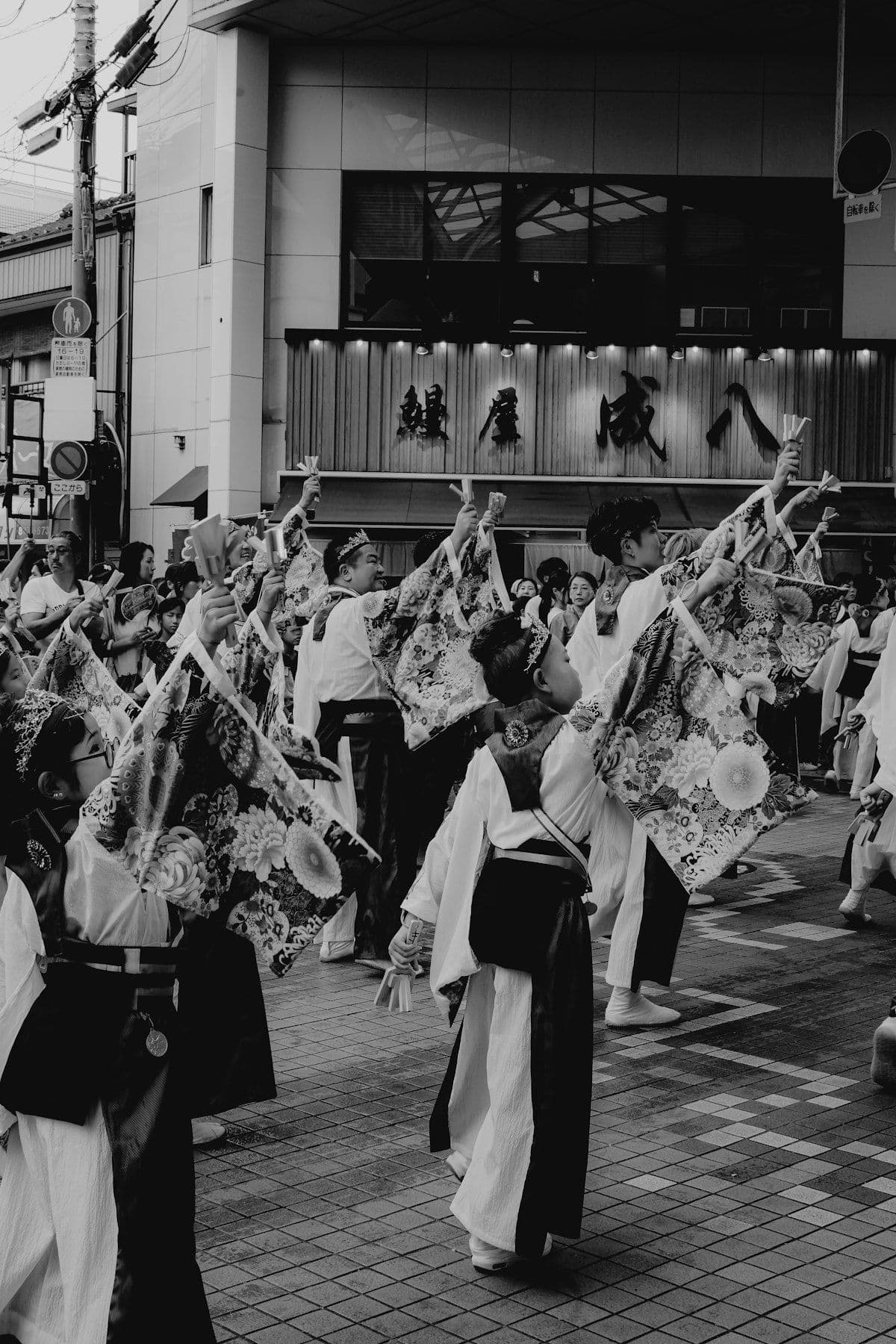
The third of Yamagata's summer festivals, less internationally known than Ginzan Onsen but significant within Japan. Thousands of dancers in straw hats decorated with safflower blooms (hanagasa) perform a specific dance — a slow, circular movement with wide arm gestures — through the streets of Yamagata city over four evenings in early August.
The aesthetic is different from the explosive energy of Nebuta or Kanto. Hanagasa is contemplative and graceful — a collective movement of several thousand people in coordinated slow rhythm. Spectators can join the procession as dancers, costumes available for rental near the parade route.
Wanko Soba Tournament — Hanamaki, Iwate (February)
An eating competition built around wanko soba — Morioka's relay soba tradition. The Hanamaki tournament (held annually in mid-February at Hanamaki Onsen) brings competitors from across Japan and occasionally internationally. The current record is over 500 bowls. The event is free to watch and highly local — a gymnasium of cheering family members watching competitive eating at extraordinary pace.
Combining the tournament with a visit to Hanamaki Onsen (one of Iwate's larger spa towns) and the nearby Miyazawa Kenji museum (dedicated to the poet and author whose work is Iwate's most significant literary legacy) makes a well-rounded February visit.
Kakunodate Cherry Blossom — Kakunodate, Akita (Late April)
Strictly a seasonal event rather than a structured festival, but the cherry blossoms over the samurai walls of Kakunodate's bukeyashiki district are a visual experience with few equivalents in Japan. The 150 weeping cherry trees that line the samurai quarter bloom simultaneously in late April, their branches arching over earthen walls and stone paths.
The crowds are significant on weekends. Weekday mornings in the last week of April, before the tour buses arrive, offer the experience as it should be.