Itinerary— all
Japan's Golden Route Is Broken. Here's What to Do Instead.
May 19, 2026
The Tokyo–Kyoto–Osaka itinerary still works. It just no longer rewards. Here is the alternative — and why it is better.
The Golden Route — Tokyo, Nikko or Hakone, Kyoto, Osaka, sometimes Hiroshima — was designed in the era of two-week first-time Japan visits. It delivers the headline experiences: bullet trains, temple gardens, ryokan, fish markets, neon. It is an excellent itinerary. It has also become, in 2025, a different experience from what it was ten years ago.
The crowds are larger. The prices are higher. The quiet moments that defined Japan travel — the temple garden at dawn, the ryokan bath without another guest in sight — are harder to find along routes that now host tens of millions of visitors. The country that the Golden Route promised still exists. It has moved.
What Has Changed
International arrivals to Japan exceeded 40 million in 2024. The primary destinations received a disproportionate share: Tokyo, Osaka, and Kyoto collectively handle a majority of all inbound visitors. The infrastructure of the Golden Route — accommodation, restaurants, transport — has responded by raising prices and reducing availability. A decent ryokan in Kyoto now requires booking four to six months ahead at prices that have risen 40% in three years.
The experience of seeing Kinkakuji now involves a queue, a crowd, and a photograph taken from the same position as three million previous photographs. The experience of standing in front of Chusonji's Konjikido in Hiraizumi, Iwate — a building of equivalent historical significance — involves almost no queue and, on most days, fewer than 20 other visitors.
Food & Sake
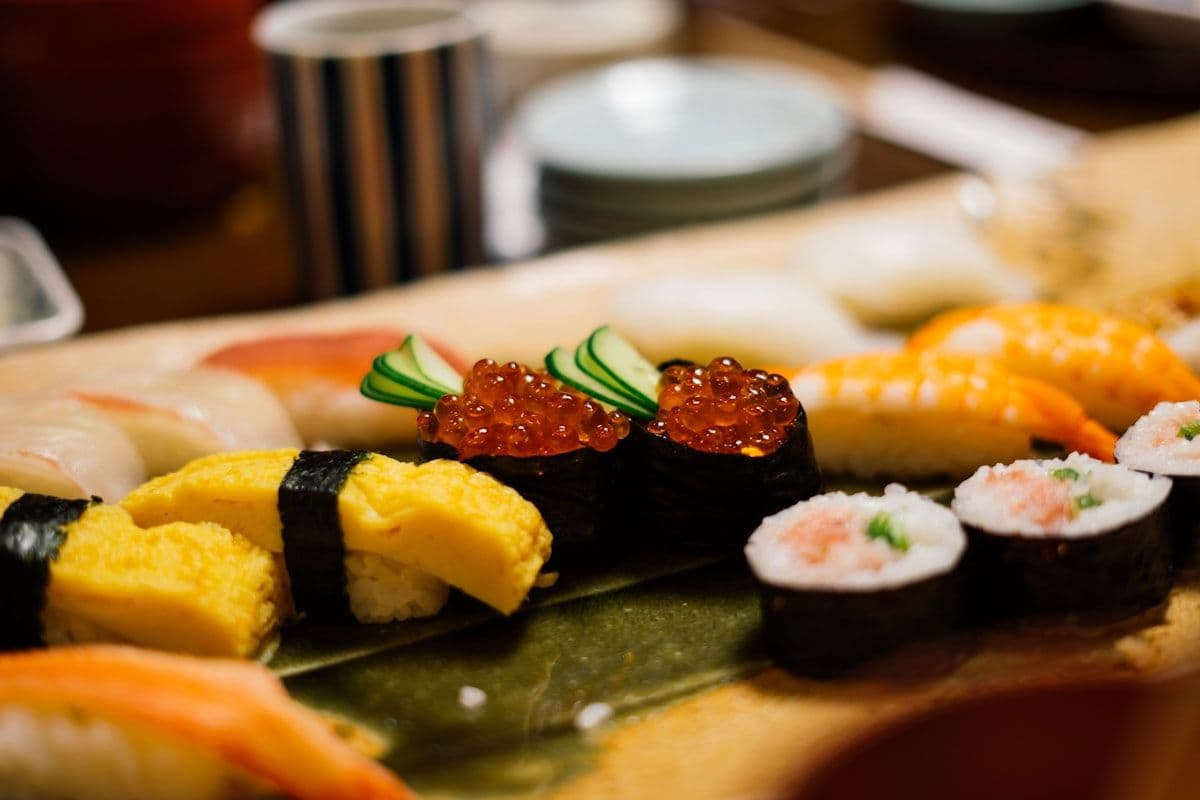
What to Eat in Tohoku: The 12 Dishes That Define the Region
Tohoku's food is the most distinct in Japan — shaped by altitude, cold, and isolation. These are the 12 dishes that define the region.
The Northern Alternative
Tohoku — the six prefectures north of Tokyo's commuter belt — offers the same categories of experience as the Golden Route, at a fraction of the crowd, with the quality advantage of being specifically itself rather than optimised for international consumption.
The equivalent of Kyoto's temples: Hiraizumi (Chusonji, Motsuji, and the gardens that preceded Kyoto's in complexity and ambition), and the mountain shrines of Dewa Sanzan. The equivalent of Hakone's onsen: Nyuto Onsen (seven springs, thatched-roof ryokan in the mountains) and Ginzan Onsen (the most beautiful village in Japan by most measures). The equivalent of Osaka's food culture: Morioka's three noodles, Sendai's beef tongue, Akita's sake. The equivalent of Nikko's nature: Oirase Gorge, Lake Towada, the volcanic landscapes of Zao and Bandai.
A Two-Week Itinerary Comparison
Standard Golden Route (14 nights)
Tokyo (4 nights) → Hakone (2 nights) → Kyoto (4 nights) → Nara day trip → Osaka (2 nights) → Hiroshima day trip → Tokyo (2 nights). Cost: ¥250,000–400,000 per person accommodation only. Highlights: outstanding. Quiet moments: difficult to find.
Northern Alternative (14 nights)
Tokyo (2 nights) → Sendai (2 nights, Matsushima day trip) → Ginzan Onsen (1 night) → Nyuto Onsen (2 nights) → Morioka (2 nights, Hiraizumi day trip) → Aomori (2 nights, Oirase Gorge day trip) → Sendai (1 night, return to Tokyo). Cost: ¥180,000–280,000 per person accommodation only. Highlights: outstanding. Quiet moments: abundant.
The Honest Trade-off
The Golden Route has more internationally recognisable brand names. Kyoto's Fushimi Inari, the deer of Nara, the bullet train view of Fuji — these are images that circulate globally and that visitors come specifically to experience. Tohoku's equivalent sites are less internationally known, which is simultaneously why they are better to visit and why they are harder to justify to people who have not been.
The argument for Tohoku to first-time visitors is best made as an extension: go to Tokyo first, take the shinkansen north, and spend your second week in a Japan that the first week did not prepare you for. The contrast itself is the argument.