Itinerary— all
Why Japan's Best Experiences Are All in Tohoku Now
May 11, 2026
The classic Japan itinerary — Tokyo, Kyoto, Osaka — still works. It just no longer rewards. Here's where the best of Japan actually is now.
The classic Japan itinerary — Tokyo, Kyoto, Osaka, maybe Hiroshima or Hakone — still works. It delivers exactly what it promises: bullet trains, temple gates, ryokan futons, and fish markets. It just no longer rewards in the way it once did. The crowds have changed the experience. The prices have responded to the demand. The quiet moments that defined Japan travel a decade ago have become difficult to find along the Golden Route.
They have not disappeared. They have moved north.
The Onsen Japan Actually Wants You to Experience
Hakone is two hours from Tokyo, which is why it has become Japan's most accessible — and therefore most crowded — onsen destination. Ryokan prices have risen 30–40% in three years. The best baths require booking six months in advance. The mountain view of Fuji that justifies the journey is obscured by cloud on most days.
Nyuto Onsen in Akita takes three hours from Tokyo and a forty-minute bus from the shinkansen station. Seven thatched-roof ryokan share a mountainside, each with its own spring. Tsurunoyu's milky white outdoor bath in winter snow is the image that appears on the best photography accounts. The booking window is competitive but manageable. The price for a night including dinner and breakfast is comparable to mid-range Hakone — and the bath is better.
Ginzan Onsen in Yamagata requires more effort — a two-hour train from Sendai, a forty-minute bus — and rewards that effort with the most beautiful village in Japan. Taisho-era wooden ryokan lit by gas lanterns, a rushing river, and silence. This is what Japan travelers describe when they describe what they were looking for.
Onsen
Ginzan Onsen: The Complete Guide (All Seasons)
Ginzan Onsen is Japan's most beautiful hot spring village — in every season. Here is everything you need to visit, from how to get there to where to stay.
The Temples That Exist Outside a Queue
Kinkakuji in Kyoto receives 4 million visitors per year. The experience of seeing the Golden Pavilion now involves queuing for forty minutes, walking through a crowd, and photographing it from a designated spot before being moved along. The temple itself is extraordinary. The visit is not.
Chusonji Temple in Hiraizumi, Iwate, receives approximately 300,000 visitors per year. It contains the Konjikido — a gold hall built in 1124, preserved under a protective structure for nine centuries — that is among the most astonishing things in Japan. You can stand in front of it for as long as you like. There is no crowd. There are no designated photograph spots. The UNESCO World Heritage site that rivals Kyoto in historical significance is, on most days, nearly empty of foreign visitors.
The Food Before the World Arrived
Sushi in Tokyo is now priced for an international clientele. Omakase at a well-regarded counter begins at ¥30,000 per person. The fish is excellent. The experience is calibrated for Instagram.
In Morioka, Iwate, wanko soba — a relay of small soba bowls delivered in rapid succession, refilled until you physically put the lid on — costs ¥3,000 and takes forty-five minutes. It is a food experience that exists nowhere else in the world. The restaurant is full of Japanese families and office parties. You are probably the only non-Japanese person there. The staff are delighted to have you.
In Yamagata, autumn means imoni: a riverside stew cooked in enormous cauldrons, shared with strangers on the Mogami River bank. Taro, beef, konnyaku, sake. It costs almost nothing. It is one of the most Japanese things you can do in Japan, and it is almost entirely off the international tourist map.
The Nature That Has Not Been Formatted
Japan has turned its most famous natural sites into managed experiences. The Arashiyama bamboo grove has a 6am access window for photography before crowds arrive. Fuji's Yoshida Trail has a gate and a fee and a waiting list. Even the autumn leaves along Kyoto's Philosopher's Path now require patience and timing.
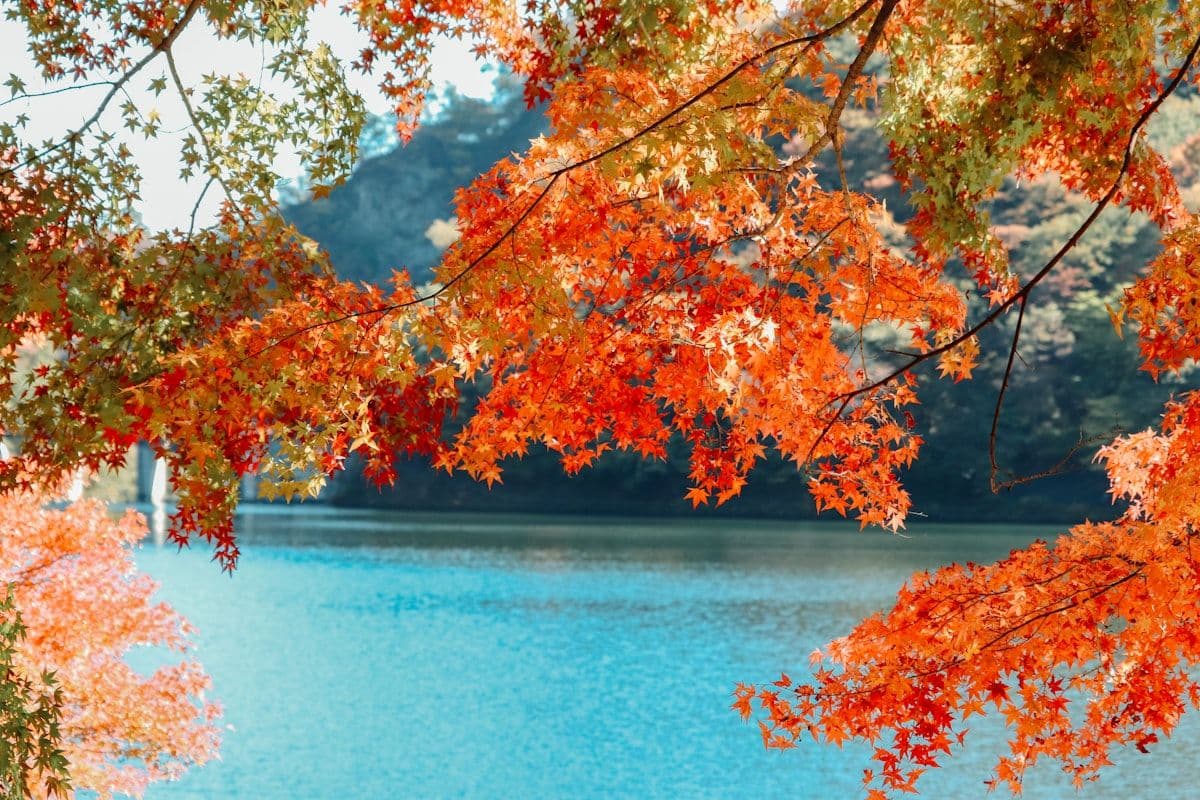
Oirase Gorge in Aomori runs fourteen kilometres along a river through old-growth forest. The trail is clear and well-maintained. In autumn, the canopy turns amber and gold over moving water. There are no crowds on Tuesday mornings in October. There are rarely crowds at all.
Dewa Sanzan in Yamagata is a three-mountain pilgrimage circuit that ascent through cedar forest to the summit of Gassan, 1,984 metres. Mountain ascetics (yamabushi) have walked it for 1,400 years. The trail is demanding and real. There are no food stalls at the top. It rewards exactly what you put into it.
The Calculation
Tohoku is three hours from Tokyo by the fastest shinkansen. It has more UNESCO World Heritage sites than most European countries. Its onsen are consistently rated above those of more famous destinations by Japanese travelers who have tried both. Its food is more distinct and more interesting than anything along the Golden Route. Its festivals are larger and older and less touristically managed than anything in Kyoto.
The only thing Tohoku lacks is the international brand recognition that Kyoto earned through decades of guidebook coverage. That coverage is now arriving. The window for visiting before the crowds follow it is open — and shorter than most people realize.