Onsen— all
Higashiyama Onsen: The Hot Spring Town Behind Aizu's Samurai City
June 24, 2026
Just east of Aizu-Wakamatsu, Higashiyama Onsen has gathered travelers along a wooded river gorge for more than a thousand years. It remains the most cultured base for exploring Aizu's samurai history.
The water came first. Long before the castle, before the samurai who would make Aizu a name spoken with weight across northern Japan, there was a narrow valley east of the plain where hot water rose from the rock beside a mountain river. Higashiyama Onsen grew up around it, and it has been receiving guests, by local reckoning, for more than a thousand years.
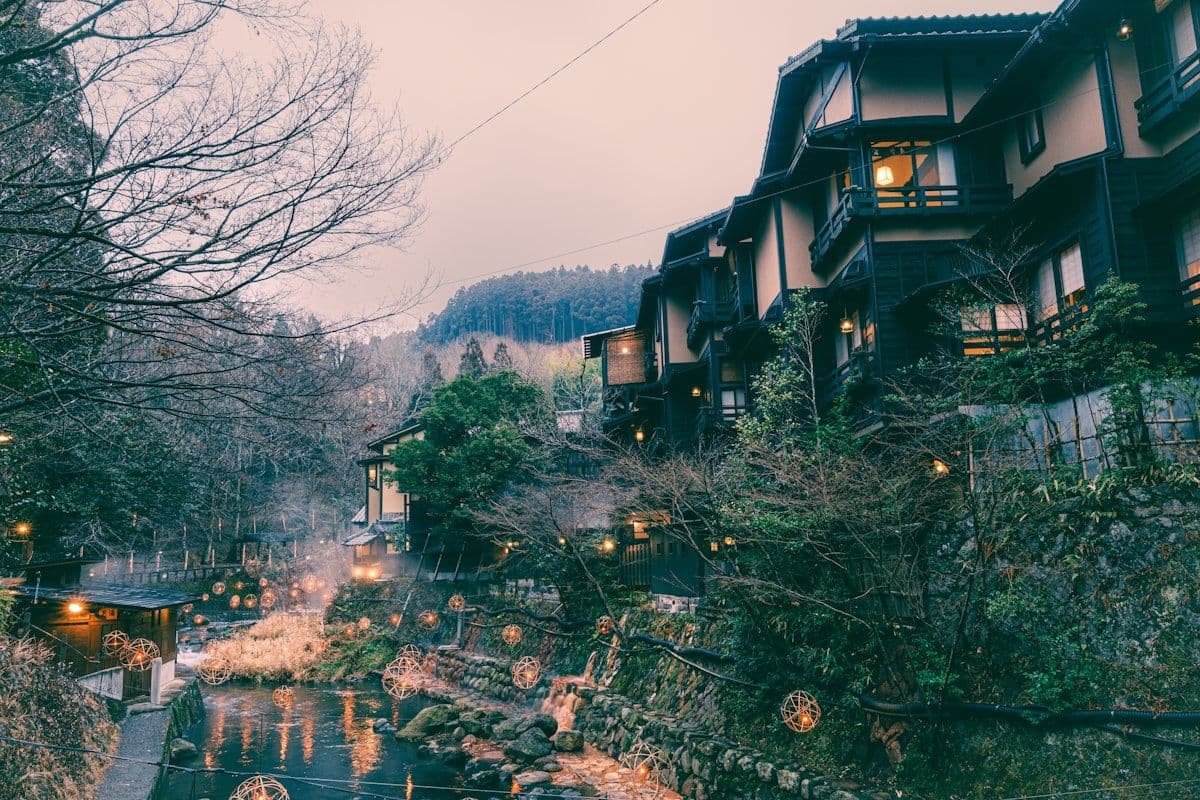
That continuity is the town's quiet argument. Many Japanese hot spring resorts trade on the present tense, on renovation and novelty. Higashiyama trades on accumulation. Wooden ryokan press against the banks of the Yukawa river gorge, their windows hanging over the current; lacquer shops and the memory of geisha quarters sit a short walk from the bathhouses; and a fifteen-minute bus ride away stands Tsuruga Castle, where one of the defining stories of nineteenth-century Japan reached its end. For a traveler who wants the Aizu region not as a checklist but as a place to inhabit, this is where to stay.
A thousand years above the Yukawa river gorge
Higashiyama sits in a fold of hills on the eastern edge of the Aizu basin, where the Yukawa river runs down out of the mountains. The name means, plainly, "eastern mountain," and the geography is the town's defining feature. There is no broad resort boulevard here. Instead the ryokan, shops, and footbridges stack along both sides of a steep, wooded gorge, so that the river is rarely out of earshot and frequently directly below the room where a guest is sleeping.
Local tradition dates the discovery of the springs to the eighth century and attaches it to Gyoki, the wandering Nara-period priest credited across Japan with founding temples, bridges, and bathing places. As with many such legends, the priest functions less as documented history than as a marker of antiquity: a way of saying that the water here is old beyond reliable memory. Whatever its true origin, the spring was established enough by the medieval and early modern periods to become one of the bathing places associated with the Aizu domain, and it carried a reputation that ranked it, in the older phrasing, among the great hot springs of the Ohu country that covered northern Honshu.
The water itself is the reason for all of it. Higashiyama's sources are generally clear and mild, drawn on for relief of the ordinary complaints that have always sent people to onsen towns: stiffness, cold, fatigue, recovery. What distinguishes the experience is less the chemistry than the setting. Bathing while the gorge darkens and the river noise rises is a particular kind of stillness, and it is the same stillness the town has been selling, in effect, for centuries.
A pleasure quarter's memory
Higashiyama was not only a place of convalescence. Through the late Edo period and well into the twentieth century it was an entertainment district, with geisha, music, and the nightlife that grew around a steady traffic of guests. The Aizu geisha became a known figure, and the trade survived here in some form long after it had faded from many comparable towns. Echoes remain in the architecture and in the occasional performance, and they give the place a worldliness that distinguishes it from the purely scenic hot spring villages elsewhere in Tohoku. This was a town that knew how to entertain travelers, not merely soak them.
The ryokan and the literary inheritance
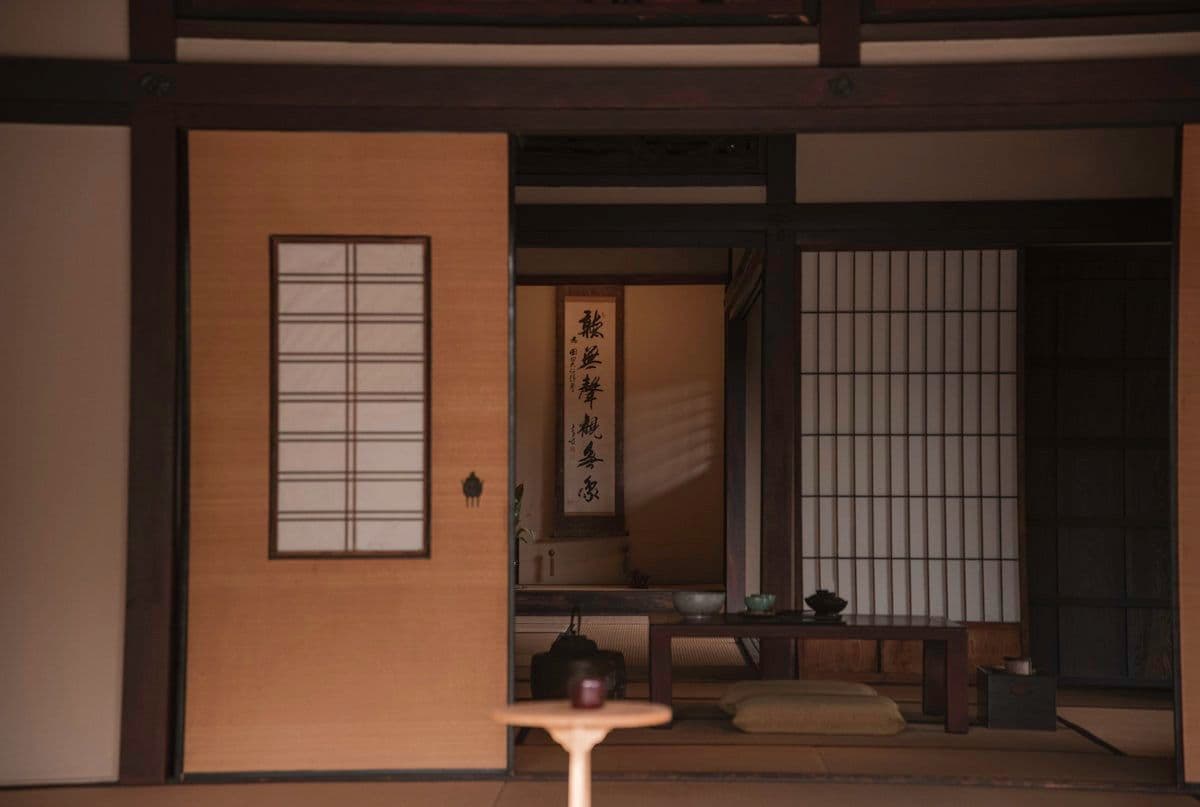
To understand why Higashiyama is described as a cultured onsen rather than simply a comfortable one, it helps to look at its inns. The town's character is carried by its ryokan, and the most celebrated of them is Mukaitaki, a rambling wooden inn that has been registered as a tangible cultural property. Built up across the Meiji and Showa eras, it is the kind of structure that no longer gets made: a warren of timber corridors, sloping rooms, and baths set against the rock, where the building itself is part of the lodging rather than a neutral container for it.
Inns of this vintage accumulate guests of consequence, and Higashiyama's have their share of literary association. The region drew writers and cultural figures in the decades when domestic travel was becoming a pursuit of the educated classes, and the older ryokan trade on those connections without making a museum of them. The point, for a present-day visitor, is atmospheric rather than biographical. Staying in a building that has hosted a century of travelers, that creaks and settles and frames the gorge through original glass, is a different experience from a modern hotel, and it is the experience Higashiyama is built to provide.
Itinerary
Aizu-Wakamatsu: The Samurai City of Fukushima
Aizu-Wakamatsu in western Fukushima is a samurai city defined by its red-roofed castle and the tragic story of the Byakkotai. A guide to the castle, the history, the craft, and how to visit.
Choosing where to stay
The town offers a spread of accommodation, from the grand historic inns to smaller family-run ryokan and a few larger modern hotels with their own bath complexes. Travelers drawn here by the history should weight their choice toward the older wooden inns, accepting that age brings narrow stairways and uneven floors along with the charm. Those traveling with children or mobility needs may prefer the newer establishments, which tend to offer easier access and more predictable comfort. Most ryokan serve dinner and breakfast featuring Aizu produce, and meals are a substantial part of the stay rather than an afterthought.
Aizu samurai history within easy reach
Higashiyama's greatest practical advantage is what surrounds it. The town is essentially a quieter eastern suburb of Aizu-Wakamatsu, the castle city at the heart of the Aizu domain, and the domain's history is among the most affecting in Japan. Aizu was a stronghold of loyalty to the Tokugawa shogunate, and when the imperial side prevailed in the Boshin War of 1868, the city paid for its allegiance. Tsuruga Castle, also known as Wakamatsu Castle, withstood a brutal siege; the reconstructed keep that stands today, with its distinctive red roof tiles, is the city's central landmark and an essential first stop.
The most enduring story belongs to the Byakkotai, the "White Tiger" corps of teenage samurai. During the fighting, a group of these young men, seeing smoke rising over the city, believed the castle had fallen and took their own lives on Iimoriyama hill. The castle had not in fact fallen, which gives the episode its terrible resonance. Their graves on Iimoriyama remain a place of pilgrimage, and the surrounding sites, including the unusual double-helix Sazaedo pagoda nearby, can be folded into a single afternoon. From Higashiyama these places are minutes away, which makes the onsen town an ideal base from which to absorb a history that rewards being taken slowly.
Lacquerware, sake, and the wider Aizu region
The samurai narrative is only part of Aizu's appeal. The region is one of Japan's notable centers of lacquerware, and Aizu-nuri has been produced here for centuries; workshops and shops in and around the city sell pieces that range from the everyday to the heirloom, and the craft makes a more thoughtful souvenir than most. Aizu is also serious sake country, its breweries fed by clean mountain water and a cold winter climate well suited to brewing. A traveler basing themselves at Higashiyama can spend mornings on history and afternoons on craft and drink without ever feeling rushed.
A day trip to Ouchi-juku
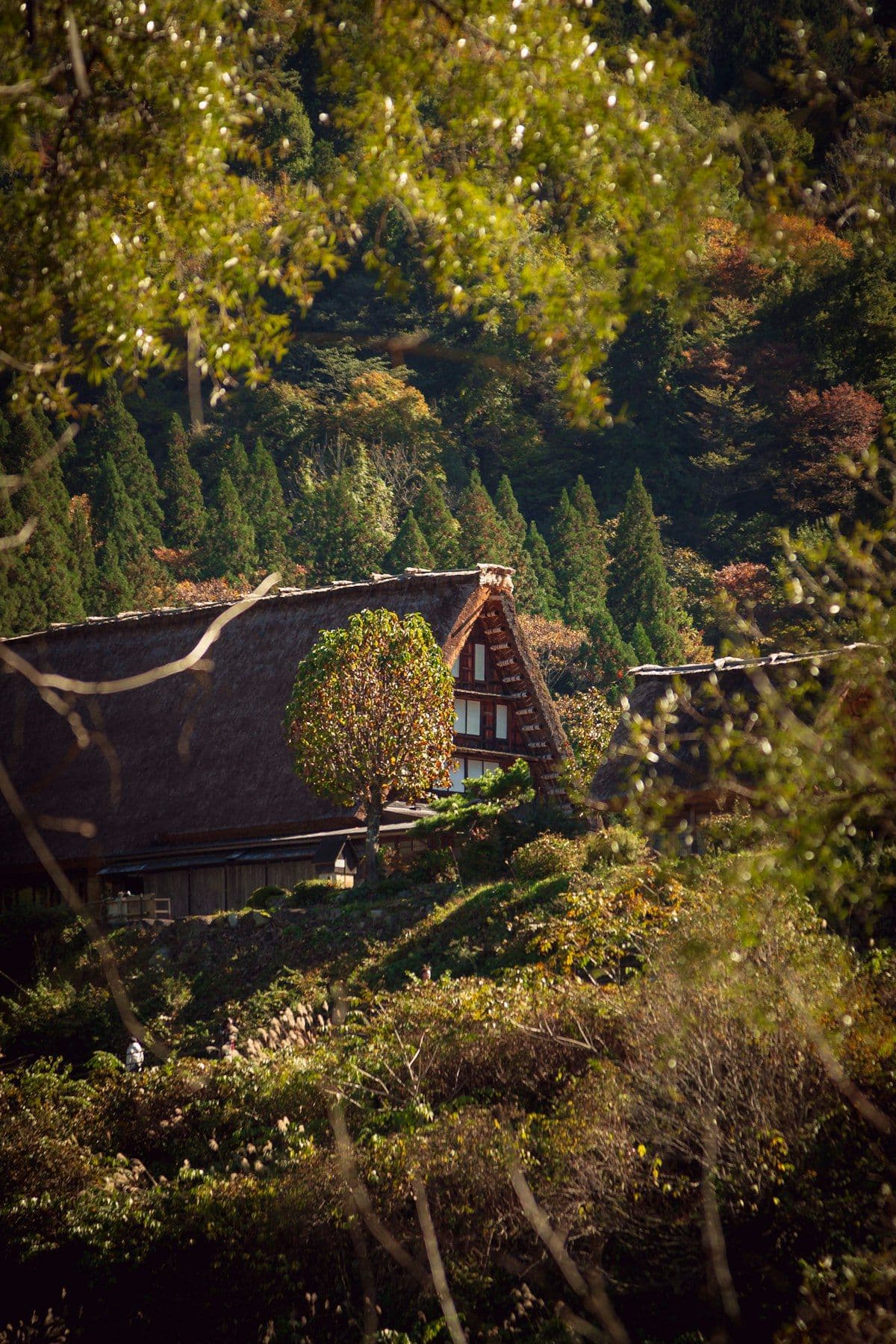
For those with an extra day, the preserved post town of Ouchi-juku lies to the south, a street of thatched-roof houses that once served travelers on an Edo-period highway and now offers one of the most photogenic streetscapes in the region. It is especially striking under snow. Reaching it requires a combination of train and bus and is more of a commitment than the in-city sights, but it pairs naturally with an Aizu itinerary and reinforces the sense of a region where the past has been unusually well kept.
Getting to Higashiyama Onsen from Aizu-Wakamatsu and Tokyo
Higashiyama is reached through Aizu-Wakamatsu, and the final leg is short. From the city's main station, local buses run east to the onsen in roughly fifteen minutes, and the loop-line sightseeing bus that circles the city's attractions also serves the area, which makes it simple to combine the springs with a day of castle and Byakkotai sites. Taxis cover the same distance quickly for those arriving with luggage. The compactness of the connection is part of the appeal: the onsen is close enough to feel like part of the city, far enough to feel like a retreat.
Reaching Aizu-Wakamatsu from Tokyo takes a little planning, as the city is not on the Shinkansen trunk line. The common route is to take a Tohoku Shinkansen to Koriyama and change to the local line that runs west across the mountains into the Aizu basin, a transfer that brings the total journey to something over three hours. Travelers coming from the Nikko or Tobu network can also approach from the south via the scenic Aizu Railway, a slower but rewarding line that passes near Ouchi-juku. However one arrives, the mountain crossing makes clear that Aizu is a region apart, historically and geographically distinct from the Pacific side of Fukushima.
Higashiyama through the seasons
The gorge setting means the town reads differently across the year, and there is no wrong season to come. Spring brings fresh green to the steep valley walls and a softness to the river. Summer is cooler here than on the plain, the moving water and shade making the gorge a natural refuge from the heat, and the evenings invite long soaks with the windows open. Autumn is the showpiece: the wooded slopes that crowd the Yukawa turn through red and gold, and the ryokan baths look out onto color, which makes it the most sought-after time and the one most worth booking ahead.
Winter is the connoisseur's season. Snow settles on the timber roofs and the gorge quiets, and the contrast of hot water against cold air gives the onsen experience its most elemental form. It is also the season that suits the Aizu story best, the cold and the snow lending weight to the history of a domain that fought and lost on its own ground, and the moment when a snow-covered Ouchi-juku is at its finest. For a traveler who wants the region at its most atmospheric and least crowded, the depth of winter is the quiet recommendation.
Frequently Asked Questions
How do you get to Higashiyama Onsen?
Higashiyama Onsen is reached through Aizu-Wakamatsu in Fukushima Prefecture. From Aizu-Wakamatsu Station, local buses or the city sightseeing loop bus reach the onsen in about fifteen minutes; a taxi covers the same short distance quickly. From Tokyo, the usual route is the Tohoku Shinkansen to Koriyama and a transfer to the local line into the Aizu basin, a total of a little over three hours.
Is Higashiyama Onsen worth visiting?
For travelers interested in Aizu's samurai history, in atmospheric wooden ryokan, or in a hot spring town with genuine depth of history, it is well worth a stay. Its strength is its setting and its proximity to Tsuruga Castle, the Byakkotai sites, and Aizu's lacquerware and sake. Those seeking a large, modern resort with extensive facilities may prefer somewhere else, but as a cultured base for exploring the region it is hard to better.
How long has Higashiyama Onsen existed?
By local tradition the springs were discovered more than a thousand years ago, with legend crediting the Nara-period priest Gyoki. The town developed over the following centuries into a bathing and entertainment district associated with the Aizu domain and was counted among the notable hot springs of northern Japan. The legend is best understood as a marker of great antiquity rather than a precise date.
What is the best season to visit Higashiyama Onsen?
Each season has its appeal. Autumn is the most popular, when the wooded gorge turns red and gold around the river, and it is worth booking well ahead. Winter, with snow on the timber ryokan and steam rising into cold air, suits the somber Aizu history and pairs with a snow-covered Ouchi-juku. Spring and summer are quieter, and the gorge stays comfortably cool even in the warmer months.