Itinerary— all
Ouchi-juku: The Thatched Post Town of the Aizu Mountains
June 15, 2026
Ouchi-juku is a single street of thatched-roof houses in the Aizu mountains of western Fukushima, preserved much as it stood when feudal lords passed through. The Edo-period post town now draws travelers for its soba, its winter snow festival, and its rare survival.
A single unpaved street runs between two rows of steep thatched roofs. There are no power lines overhead, no asphalt, no vending machines glowing on the corners. Ouchi-juku, in the mountains of western Fukushima, looks much as it did when feudal processions stopped here for the night on the road between Aizu-Wakamatsu and Nikko.
The town was a shukuba, a post station on the Aizu-Nishi Kaido, where travelers and officials rested and changed horses. When railways arrived in the late nineteenth century and routed traffic elsewhere, the road fell quiet and the village was left behind. That neglect, oddly, is the reason Ouchi-juku still exists. While prosperous towns rebuilt themselves in concrete, this one had no money and no reason to change.
Today the kayabuki houses hold soba restaurants, family-run inns, and shops selling lacquerware and pickles. Ouchi-juku is small enough to walk end to end in fifteen minutes, yet it rewards a slower pace and an awareness of how close it came to disappearing entirely.
A Post Town on the Aizu-Nishi Kaido
The Aizu-Nishi Kaido connected the castle town of Aizu-Wakamatsu with Imaichi, near Nikko, threading through steep and forested country. Along this route, post towns were spaced roughly a day's travel apart. Ouchi-juku served as one such waystation, providing lodging, meals, and fresh horses to the people who moved along the road: merchants carrying goods, pilgrims, and the formal processions of the daimyo making their required journeys to and from Edo.
How the village was built
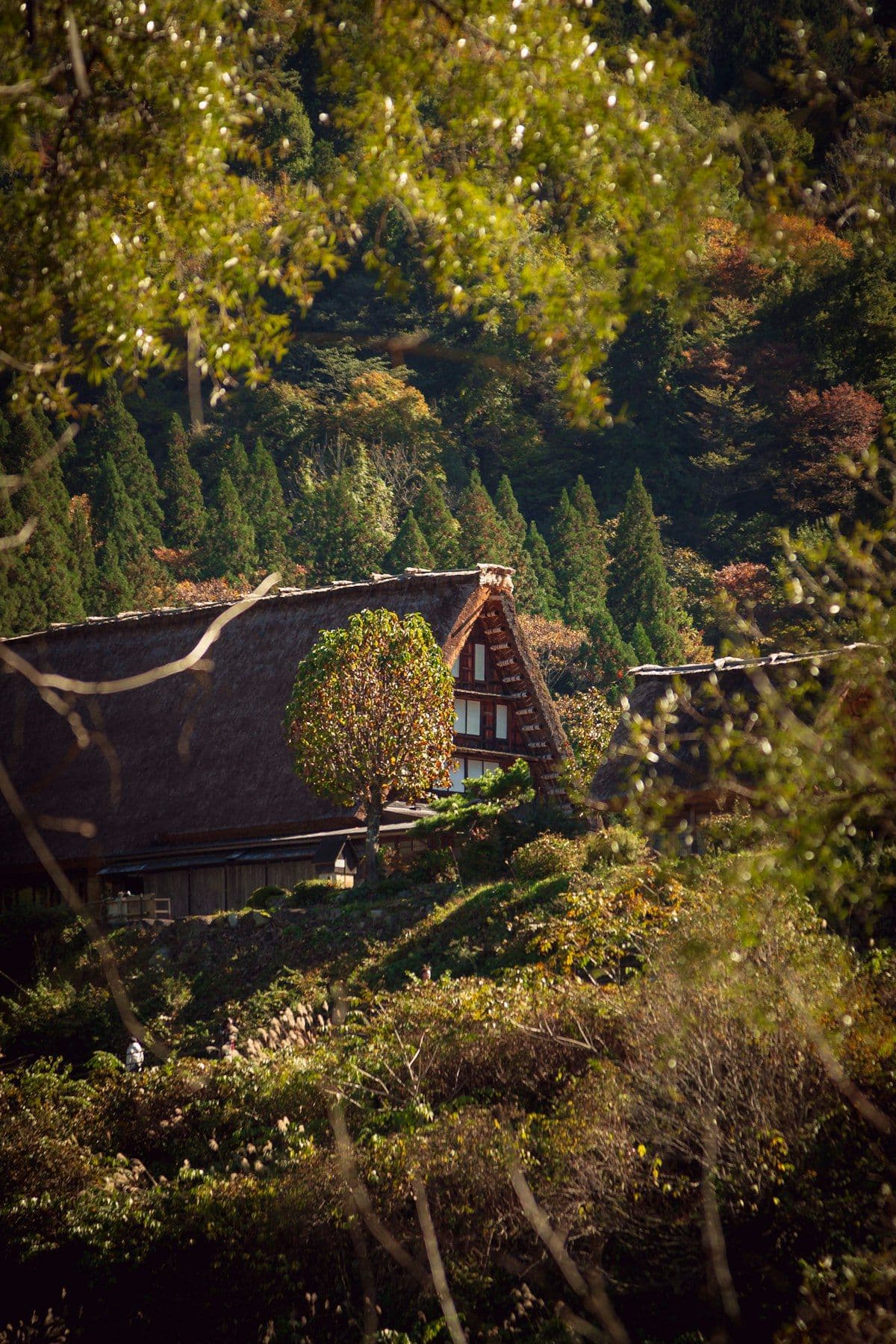
The houses stand in two facing rows along the street, their gable ends turned toward the road and their thatched roofs pitched sharply to shed the heavy Aizu snow. Kayabuki construction uses bundled susuki grass laid thick over a timber frame, an old technique that insulates against both winter cold and summer heat. A drainage channel runs alongside the street, fed by mountain water, and was once used for washing and for keeping food cool. The layout is practical rather than decorative, shaped entirely by the demands of the road and the climate.
Decline and rediscovery
When the national rail network expanded, the old highway lost its purpose almost overnight. Ouchi-juku became a remote farming hamlet, poor and increasingly empty. Through much of the twentieth century its thatched houses were regarded as an embarrassment, evidence of a place left behind. The shift in attitude came later, as appreciation grew for surviving examples of pre-modern Japan. In 1981 the village was designated an Important Preservation District for Groups of Traditional Buildings, the same national category that protects historic streetscapes elsewhere in the country.
Preserving the Thatched Roof Village
Preservation here is not a museum arrangement. People still live and work in the houses. What makes the streetscape coherent is an agreement among residents, often summarized as a pledge not to sell, not to rent out, and not to destroy. The principle extends to the appearance of the buildings. Facades are kept in traditional form, modern additions are concealed, and the visual clutter of contemporary Japanese streets is largely absent.
What you will not see
There are no overhead power lines along the main street; utilities have been routed out of sight. Air-conditioning units, satellite dishes, and signage are kept discreet. The road itself remains unpaved, dust in summer and snow in winter. These are deliberate choices, sustained by a community that has agreed to forgo some conveniences in exchange for keeping the town intact. The result is a rare thatched roof village in Japan where the historic character has not been thinned out by modern intrusions.
Maintaining the roofs
Itinerary
Aizu-Wakamatsu: The Samurai City of Fukushima
Aizu-Wakamatsu in western Fukushima is a samurai city defined by its red-roofed castle and the tragic story of the Byakkotai. A guide to the castle, the history, the craft, and how to visit.
Thatch is demanding. A kayabuki roof must be re-laid periodically, a costly and skilled task as the number of thatchers in Japan continues to fall. In Ouchi-juku the work is organized communally, with residents and craftspeople replacing sections in rotation. Bundles of cut grass are sometimes visible drying near the houses. Watching a roof being rethatched is a reminder that the village is maintained by ongoing labor, not frozen in place.
Negi-soba and the Food of Ouchi-juku
The dish most associated with Ouchi-juku is negi-soba. Buckwheat noodles are served cold or in hot broth, and instead of chopsticks the diner is given a single long negi, a Japanese leek or green onion. The negi is used to scoop and lift the noodles, and bites are taken from it along the way, so that it serves as both utensil and condiment. The pungency of the raw onion cuts against the earthy soba.
The origins of the custom
Accounts of how the tradition began vary, and the village wisely does not insist on a single story. One common explanation links it to celebratory or ceremonial meals, where a whole long onion symbolized good fortune. Whatever its source, the practice is now firmly part of the place. Eating with a negi is awkward at first; most visitors give up and ask for chopsticks partway through, which the restaurants happily provide. The point is less the efficiency than the experience.
Beyond the noodles
Aizu is buckwheat country, and the soba here is taken seriously, often ground from local grain. Shops along the street also sell grilled char on skewers, sticky rice dumplings coated in a sweet-savory miso glaze, and pickles and preserves made from mountain vegetables. Aizu lacquerware, a regional craft with a long history, appears in the souvenir shops. Prices for a soba meal generally fall in the modest range typical of rural restaurants, though figures shift over time and with the season.
Seasons and the Snow Festival
Ouchi-juku changes sharply through the year, and the timing of a visit shapes what it offers. Summer brings dense green to the surrounding hills and a humid warmth that the thatch helps to soften indoors. Autumn turns the mountains red and gold, and the contrast against the dark roofs is among the finest in the Aizu region. Each season draws its own crowds, with the colored leaves of late October and early November especially popular.
The February Snow Festival
The town's signature event is its winter Snow Festival, held over a weekend in February. Snow lanterns are carved along both sides of the street and lit in the evening, small flames glowing in hollowed mounds of snow while the thatched roofs sit heavy under their white load. The effect at dusk, with the street running between two rows of lantern-light, is the image that appears on most postcards of the place. The festival typically includes a fireworks display over the snow-covered village.
Crowds and timing
Ouchi-juku is compact, and on peak days, particularly autumn weekends and the festival, the single street fills quickly. Tour buses arrive through the middle of the day. Travelers who want the quieter version of the town do best to arrive early in the morning or stay overnight in one of the minshuku inns, when day visitors have left and the street empties. Winter outside the festival weekend can also be peaceful, though deep snow and limited transport call for some planning.
Getting to Ouchi-juku in Fukushima
Ouchi-juku is genuinely remote, and reaching it is part of the appeal. There is no station in the village itself. The usual approach is by the Aizu Railway to Yunokami Onsen Station, followed by a short bus or taxi ride to the town. The bus connection is seasonal and infrequent, so checking the timetable in advance matters, and a taxi is the reliable fallback when buses are not running.
Yunokami Onsen Station
Yunokami Onsen is itself a reason to make the trip. It is widely cited as Japan's only train station with a thatched roof, a kayabuki building that matches the architecture of the village beyond it. There is a free foot bath on the platform, fed by hot spring water, where travelers can wait for a connection. The station sets the tone for Ouchi-juku before the village even comes into view.
Combining the trip
Because the journey is involved, many travelers fold Ouchi-juku into a wider loop through the Aizu area. The castle town of Aizu-Wakamatsu, with its reconstructed Tsuruga Castle and samurai history, lies to the north and serves as a natural base. The scenic Tadami Line, one of Japan's most photographed rural railways, runs west through river valleys and is often paired with an Ouchi-juku visit. Treating the post town as one stop in a two- or three-day Aizu itinerary makes the distance worthwhile rather than burdensome.
Frequently Asked Questions
What is Ouchi-juku known for?
Ouchi-juku is known as a preserved Edo-period post town in the Aizu mountains of Fukushima, with a single unpaved street lined by thatched-roof houses. It is also known for negi-soba, buckwheat noodles eaten with a long green onion in place of chopsticks, and for its February Snow Festival, when snow lanterns light the length of the street.
How do you get to Ouchi-juku?
The common route is the Aizu Railway to Yunokami Onsen Station, then a short seasonal bus or a taxi to the village, as there is no station in the town itself. Many travelers reach the area from Aizu-Wakamatsu and combine the visit with the scenic Tadami Line. Checking bus timetables ahead of time is advisable, since service is limited.
When is the best time to visit Ouchi-juku?
Each season has its draw. Autumn, in late October and early November, brings strong color to the surrounding mountains. The February Snow Festival is the most dramatic time, with carved snow lanterns and fireworks. Summer is lush and green. In every season, arriving early or staying overnight avoids the midday tour-bus crowds on the narrow street.
Why does Ouchi-juku look so well preserved?
The village declined when railways bypassed the old highway, so it was never rebuilt in modern materials. In 1981 it was designated an Important Preservation District, and residents agreed to keep the building facades traditional, conceal modern fixtures, and route power lines out of sight. The combination of historical neglect and deliberate community rules accounts for its intact appearance.