Nature— autumn
Goshikinuma: Fukushima's Five Colored Ponds
July 1, 2026
A cluster of volcanic ponds in northern Fukushima glows turquoise, cobalt, and emerald — colors born from a single catastrophic eruption. A guide to walking Goshikinuma and reading its strange chemistry.
The water should not be that color. Standing at the edge of Bishamonnuma on a still autumn morning, with maples burning red along the far bank, the surface holds a blue so saturated it looks dyed. A few steps along the trail, another pond shows green. A third leans toward a milky, mineral turquoise. None of it is artificial, and none of it is quite the same from one hour to the next.
This is Goshikinuma — the "Five Colored Ponds" — a string of small volcanic lakes scattered across the Urabandai highlands of Fukushima Prefecture, inside Bandai-Asahi National Park. The name undersells the place. There are far more than five bodies of water here, and their palette runs well beyond five shades. What unites them is a shared origin in violence, and a chemistry that turns ordinary mountain runoff into something closer to stained glass.
What Goshikinuma Is
Goshikinuma sits on the northern flank of Mt. Bandai, in a region known as Urabandai — literally "the back of Bandai," the shadowed side of the volcano that faces away from Lake Inawashiro to the south. The area is a plateau of forest, wetland, and water at roughly 800 meters elevation, cooler than the lowlands and quick to turn color in October.
The Five Colored Ponds are the most visited of Urabandai's many lakes, and the easiest to experience on foot. A walking trail roughly 3.6 kilometers long links the principal ponds in a gentle, mostly flat line through the woods. The largest, Bishamonnuma, anchors one end; the trail then threads past a sequence of smaller pools — Akanuma, Midoronuma, Rurinuma, Bentennuma, Aonuma — each with its own character and color, before emerging near the Urabandai visitor facilities at the other end. It is the kind of walk that rewards slowness. The ponds do not announce themselves all at once; they appear between trees, one at a time, often startlingly different from the last.
Despite the vivid water, this is not a manicured attraction. The trail is a forest path with roots and uneven ground in places, and the ponds are left largely as the mountain made them. That restraint is part of the appeal. Goshikinuma feels less like a sight to be ticked off than a slow puzzle to be read — why this one blue, that one green, the next one almost rust.
The 1888 Eruption That Made the Lakes
None of this water existed before the summer of 1888. On July 15 of that year, Mt. Bandai erupted in one of the most destructive volcanic events in modern Japanese history. The blast was not a tidy column of lava but a violent phreatic explosion — steam-driven, sudden — that tore open the mountain and collapsed its northern face.
The collapse sent an enormous avalanche of rock and debris cascading down the slopes, burying villages and killing hundreds of people. As the debris settled across the valleys below, it dammed rivers and streams and choked off natural drainage. Water backed up behind these new earthen barriers, and over the following years it pooled into hundreds of lakes and ponds across what is now Urabandai. Goshikinuma is the most famous remnant of that single catastrophic afternoon.
It is worth holding the two facts together while walking the trail. The same event that destroyed an entire mountainside and a community also created one of Tohoku's most beloved landscapes. The serenity of the ponds today is, geologically speaking, very young — and the mountain that made them still stands, quiet but not extinct, just to the south.
Why the Ponds Are Different Colors
The first question every visitor asks is the obvious one: why are adjacent ponds, fed by the same rain and the same mountain, such different colors? The answer is a mix of chemistry, suspended particles, and light — and it is genuinely different from one pond to the next.
Minerals from a Volcanic Source
Nature
Mount Bandai and Urabandai: Fukushima's Volcano and Its Aftermath
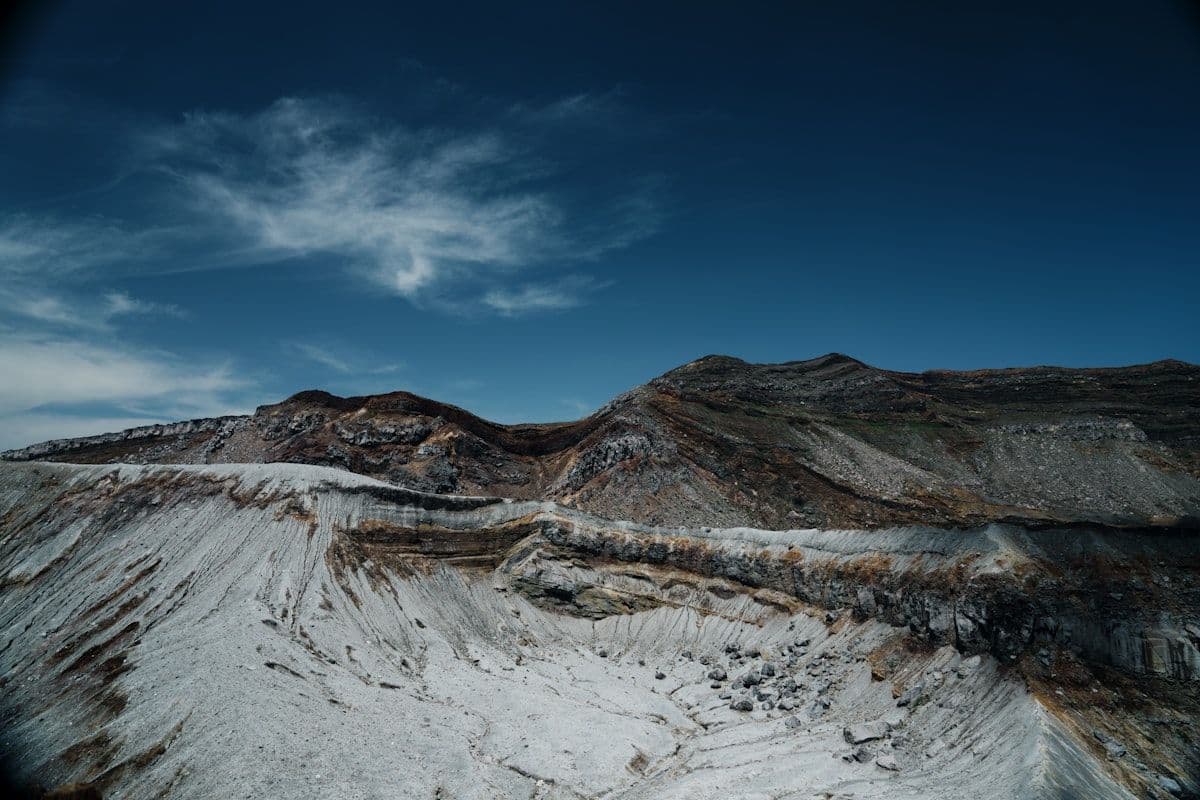
Mount Bandai is a living volcano with two faces. This guide covers Mt Bandai hiking, the 1888 eruption that built the Urabandai plateau, and the lakes, foliage, and access that make Fukushima's signature peak worth the climb.
Water seeping through volcanic rock picks up dissolved minerals and acids as it goes. Around Mt. Bandai that means iron compounds, volcanic acids, and other elements that vary depending on the exact path the water takes underground. Each pond is fed by its own combination of springs and runoff, so each ends up with a slightly different chemical signature. Iron-rich water tends toward reddish or brownish tones; other mineral mixes scatter light in ways that read as blue, cobalt, or emerald to the eye.
Suspended Particles and Light
Color here is not only about what is dissolved but about what is suspended. Fine particles of clay and mineral matter hang in the water and scatter incoming light, much as particles in the atmosphere scatter sunlight into a blue sky. The size and density of those particles, combined with the angle and quality of the daylight, determine which wavelengths reach the surface. This is why the same pond can look milky turquoise under bright midday sun and a deeper, flatter blue under cloud.
Colors That Refuse to Sit Still
The practical consequence is that Goshikinuma's colors are never fixed. They shift with the weather, the season, and the time of day. A pond photographed at nine in the morning may look subtly wrong by noon, and different again under autumn's lower, warmer light. Aonuma and Rurinuma are known for especially intense blues; Akanuma carries a reddish cast in its margins; Bishamonnuma reads as a broad, calm blue-green. Visitors hoping for a single definitive image often find the more interesting reward is simply watching the water change.
Walking the Trail, Pond by Pond
The Goshikinuma trail can be walked in either direction, and most visitors take roughly an hour to ninety minutes at an unhurried pace, longer with stops for photographs. Starting from the Bishamonnuma side is the most common approach, as it puts the largest and most dramatic pond first.
Bishamonnuma
Bishamonnuma is the biggest of the group and the social heart of the walk. Its broad surface shifts between blue and green depending on the day, and on clear mornings Mt. Bandai's ragged summit reflects in the water. Rowboats are available here in the warmer months, a rare chance to be out on the colored water rather than beside it — and a good way to appreciate how the hue deepens away from the shallows.
Akanuma, Midoronuma, and the Smaller Pools
Past Bishamonnuma the trail enters quieter woods, and the ponds grow smaller and more individual. Akanuma — the "red pond" — takes its name from the rusty, iron-tinged vegetation and water at its edges. Midoronuma and the marshier pools nearby trade vivid color for a softer, boggy stillness, fringed with reeds and reflecting the surrounding trees.
Rurinuma, Bentennuma, and Aonuma
Toward the far end of the trail come some of the most photographed colors. Rurinuma, whose name evokes lapis lazuli, can glow an extraordinary blue when the light cooperates. Bentennuma and Aonuma — the "blue pond" — round out the sequence with their own variations on cobalt and emerald. By the time the trail emerges near the visitor center, most walkers have stopped trying to name the colors and simply started counting them.
Seasons at Goshikinuma
The ponds are open year-round, and each season reframes them. Autumn is the headline act. From mid-October into early November, the deciduous forest around the water turns through yellow, orange, and deep red, and the contrast between the foliage and the saturated ponds is the single best reason to visit. The cool, clear light of the season also tends to bring out the water's blues. It is the busiest period, and deservedly so.
Summer offers a different pleasure: lush green forest, comfortable highland temperatures, and the option of taking a rowboat out on Bishamonnuma. The water reads greener against the surrounding canopy. In winter, snow transforms the plateau entirely; guided snowshoe walks let visitors reach the ponds across a hushed white landscape, with the colored water all the more startling for its frozen-edged setting. Spring brings fresh growth and snowmelt, with quieter trails between the winter and summer crowds.
Getting There and Practical Tips
Goshikinuma lies in the Urabandai area of Kitashiobara village, north of Lake Inawashiro. The usual gateway is Inawashiro Station on the JR Banetsu West Line, reachable by train from Koriyama, which sits on the Tohoku Shinkansen. From Inawashiro Station, local buses bound for Urabandai stop near the Goshikinuma trailheads; the ride climbs from the lakeside plain up onto the highland plateau. Drivers will find parking at both ends of the trail, near Bishamonnuma and near the Urabandai visitor center.
Because the trail is one-way in feel — running between two separate trailheads rather than looping — it helps to plan the return. Walkers who do not want to retrace their steps can time a bus from the far end, or arrange to be collected there. Sturdy shoes are sensible given the roots and occasional mud, and layers are wise: the plateau runs cooler than the lowlands, markedly so in autumn mornings and after dark. Combining Goshikinuma with nearby Mt. Bandai or Lake Inawashiro makes for a full and varied day in this corner of Fukushima.
Frequently Asked Questions
How long does it take to walk the Goshikinuma trail?
The trail runs roughly 3.6 kilometers and takes most visitors about an hour to ninety minutes at a relaxed pace. The ground is mostly flat but includes forest sections with roots and uneven footing, so add time for photographs and for simply lingering at the more colorful ponds.
When is the best time to visit Goshikinuma?
Autumn, from roughly mid-October into early November, is the standout season, when the surrounding foliage turns vivid and the clear light deepens the ponds' blues. Summer offers green forest and rowboats on Bishamonnuma, while winter snowshoe walks reveal the colored water against a snowbound landscape. Each season is rewarding in a different way.
Why are the ponds different colors?
Each pond is fed by its own mix of springs carrying volcanic minerals and acids — including iron, which can lend reddish tones — and each holds different suspended particles that scatter light in distinct ways. Combined with the weather and the angle of the sun, this produces the range of turquoise, cobalt, emerald, and reddish hues, which shift throughout the day.
How do you get to Goshikinuma without a car?
Take a train to Inawashiro Station on the JR Banetsu West Line, accessible via Koriyama on the Tohoku Shinkansen. From the station, local buses head up to the Urabandai area and stop near the Goshikinuma trailheads. Checking bus times in advance is wise, particularly for the return, since service to the highland is less frequent than in the city.