Nature— spring
Tohoku Cherry Blossom: The Complete Hanami Guide
June 15, 2026
Tohoku cherry blossom season runs weeks behind Tokyo and Kyoto, opening from late April into early May. That lag is the region's quiet advantage: a chance to chase sakura long after the southern petals have fallen.
By the time the cherry blossoms fade in Tokyo, Tohoku has barely begun. The six prefectures of northern Japan bloom on their own calendar, weeks behind the capital, and that delay is the single most useful fact a traveler can hold. It means the Tohoku cherry blossom is not a consolation prize for those who missed the famous bloom further south. It is a second season entirely, with grander castles, wider rivers of petals, and a fraction of the crowds that press through Kyoto in early April.
The reason is latitude and altitude. Aomori, at the northern tip of Honshu, sits roughly 600 kilometers from Tokyo, and the cold lingers in its mountains well into spring. The sakura front, the imaginary line that sweeps north across Japan each year, reaches Tohoku last of the main islands. Where Tokyo and Kyoto peak in late March or the first days of April, the Tohoku sakura typically opens from mid to late April in the south of the region and continues into the first week of May in the far north.
This guide covers cherry blossom across northern Japan as a single, movable feast: where to go, when each place is likely to peak, how to reach it by train, and how to build a route that follows the bloom from one prefecture to the next.
Why Tohoku sakura blooms later than Tokyo and Kyoto
Cherry trees flower in response to accumulated warmth after winter. The Somei-yoshino, the pale clonal variety that accounts for most of Japan's celebrated avenues, opens once daily temperatures climb past a sustained threshold in early spring. Because Tohoku stays colder longer, that threshold arrives later. The effect compounds as you move north and uphill: a valley town may bloom a week ahead of a hillside castle only thirty kilometers away.
The practical consequence is a staggered season that can stretch across a fortnight or more. Fukushima and southern Miyagi tend to open first, often in mid to late April. Akita and Iwate follow. Aomori, and Hirosaki in particular, usually peaks at the very end of April or in the opening days of May, sometimes brushing against the Golden Week holiday. A traveler arriving in Sendai when the first blossoms appear can, with reasonable planning, still be standing under fresh sakura in Aomori a week and a half later.
This is the logic behind chasing the bloom. The cherry blossom in northern Japan is not one event but a moving line, and the rail network makes it possible to ride that line northward at roughly the same pace it travels.
The major Tohoku cherry blossom sites, prefecture by prefecture
Tohoku's hanami spots are not interchangeable. Each has a distinct character, shaped by castles, samurai streets, river embankments, and the particular variety of cherry that grows there. The following are the anchors of any serious itinerary, arranged roughly from north to south.
Hirosaki Castle, Aomori
Hirosaki is the reason many travelers come north at all. The castle park holds more than 2,500 cherry trees, some over a century old, and it is routinely ranked among Japan's three greatest cherry blossom sites. The signature image is the moat: when the petals fall, they gather on the still water until the surface turns solid pink, a phenomenon called hanaikada, the petal raft. Rowboats drift through it, parting the petals as they go. The festival here typically runs from late April into early May, with the Aomori bloom arriving last in the region. Evening illuminations turn the keep and the petal-covered water into one of the more memorable yozakura, or night cherry blossom, scenes in the country.
Kakunodate, Akita
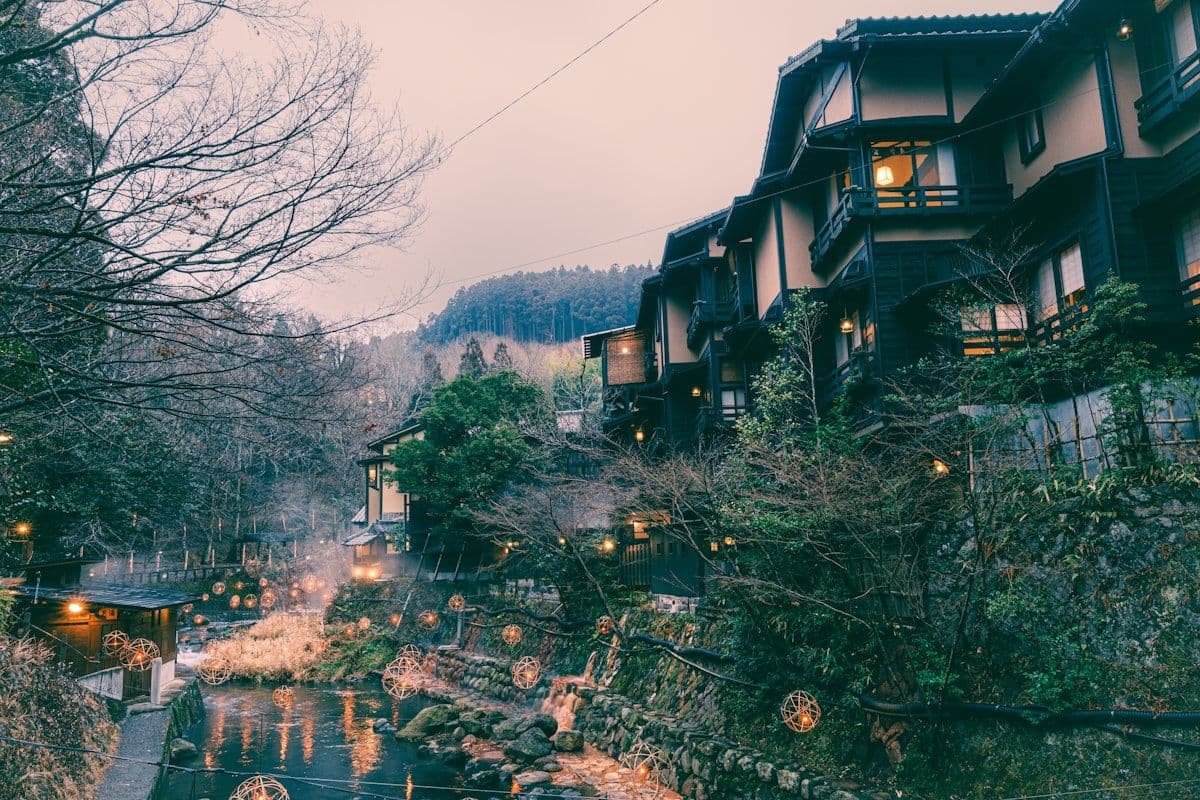
Kakunodate is a different register of beauty. Along the preserved samurai district, where dark wooden walls and gates front the old streets, weeping cherry trees descend in curtains of pale pink. Many of these shidarezakura were brought from Kyoto more than two centuries ago, and they belong to the town rather than to any single park, leaning over the road as you walk beneath them. A short distance away, the Hinokinai River is lined with a long tunnel of Somei-yoshino, a continuous wall of blossom for nearly two kilometers along the embankment. The town usually peaks in late April. The samurai houses themselves, several open to visitors, give the place a depth that a riverside avenue alone cannot.
Itinerary
Kakunodate: Walking Tohoku's Best-Preserved Samurai District
The Kakunodate samurai district is the most intact street of feudal residences in Tohoku — black-walled estates, weeping cherry trees, and a 300-year-old cherry-bark craft. Here is how to visit, and when.
Kitakami Tenshochi, Iwate
On the banks of the Kitakami River, Tenshochi park runs an avenue of roughly two kilometers beneath an arch of cherry trees, with thousands more spread across the grounds. Horse-drawn carriages and pleasure boats operate during the festival, and the scale of the planting gives it a generous, unhurried feel. Kitakami sits on the Tohoku Shinkansen line, which makes it one of the easier major sites to reach, and it tends to bloom in mid to late April.
Shiroishi River and Funaoka, Miyagi
In southern Miyagi, the Shiroishi River runs for kilometers beneath an unbroken line of cherry trees, the so-called Hitome Senbonzakura, a thousand cherry trees at a glance, with the snow-streaked Zao mountains behind them. Nearby Funaoka Castle Park climbs a hill blanketed in sakura, with a slope-car carrying visitors toward a viewpoint over the river valley. This is among the earlier blooms in Tohoku, often opening in mid-April, which makes it a natural starting point for a northbound chase.
Tsuruga Castle, Fukushima
In Aizu-Wakamatsu, the reconstructed keep of Tsuruga Castle, also called Tsurugajo, stands behind a ring of roughly a thousand cherry trees. The castle's distinctive red-tiled roof against the blossom is particular to this site, and the surrounding park fills with hanami picnics during the season. Fukushima sits at the southern edge of Tohoku and tends to bloom earliest of all, frequently in mid-April, only a week or so behind Tokyo.
Bloom timing and following the forecast
Predicting peak bloom is the central difficulty of any hanami trip, and it is harder in Tohoku because the season is later and more weather-dependent. Several Japanese weather services publish a sakura forecast each spring, updated frequently from around March, giving expected opening dates and full-bloom dates for individual cities. Full bloom, mankai, usually arrives a few days to a week after the first flowers open, and the prime window often lasts only a week before wind or rain begins to scatter the petals.
As a working rule, southern Tohoku peaks in mid to late April and the north peaks from late April into early May. But these are tendencies, not promises. A warm March can pull the whole season forward by several days; a cold snap can hold it back. The safest approach is to plan the route in advance, book flexible or refundable lodging where possible, and check the forecast in the final two weeks before departure to decide which prefecture to start in. Fallen petals are not failure, incidentally. The hanaikada at Hirosaki and the petal-strewn paths elsewhere are, for many, the most beautiful phase of all.
Yozakura, festivals, and far fewer crowds than Kyoto
Most of the major sites stage a cherry blossom festival during the season, with food stalls, boat rentals, and the evening illuminations that transform the trees after dark. Yozakura at Hirosaki, with the lit keep mirrored in the petal-covered moat, is the headline act, but Kakunodate, Kitakami, and Tsuruga Castle all light their trees as well, and the warmer evenings of a Tohoku spring make lingering pleasant.
The decisive difference from the famous southern sites is space. Kyoto's most photographed cherry spots can be shoulder to shoulder at peak, and the experience tilts toward endurance. Tohoku is not empty during sakura season, especially at Hirosaki over Golden Week, but the crowds are a different order of magnitude. At the river embankments and smaller castle parks it remains entirely possible to find a quiet stretch of trees with the mountains behind them. For travelers who have already done Kyoto in spring, the contrast is the point, much as it is across the region in other seasons.
Getting there by shinkansen and a prefecture-by-prefecture strategy
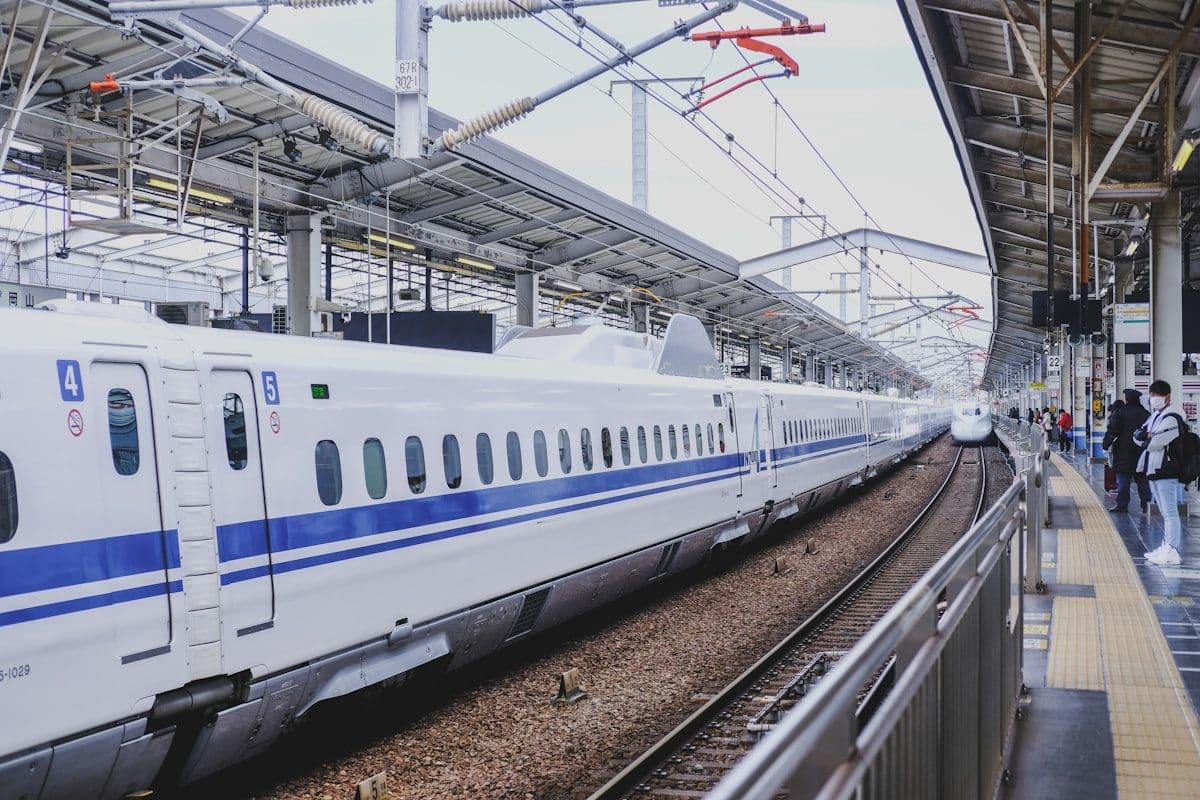
The Tohoku Shinkansen is the spine of any cherry blossom trip. From Tokyo it runs north through Fukushima, Sendai, Morioka, and on to Aomori, putting the southern sites within roughly ninety minutes to two hours of the capital and the far north within around three to three and a half hours. The Akita Shinkansen branches west toward Kakunodate, and the Yamagata Shinkansen serves the southwest. A rail pass covering the region pays for itself quickly across multiple long legs, and reserved seats are worth securing in advance during the season.
A northbound chase, in order
The cleanest strategy follows the bloom from south to north over roughly a week to ten days. Begin in Fukushima at Tsuruga Castle and the Aizu basin, which open earliest. Move to southern Miyagi for the Shiroishi River and Funaoka, then use Sendai as a comfortable base. Continue north to Kitakami in Iwate, branch west on the Akita Shinkansen to Kakunodate, and finish at Hirosaki in Aomori, which peaks last. Done in this sequence, the itinerary tracks the sakura front almost exactly, so that each stop arrives at or near its own peak rather than ahead of or behind it.
If time is short
Travelers with only a few days should pick a single latitude band and commit to it. In late April, the corridor from Akita's Kakunodate up to Aomori's Hirosaki is the strongest pairing, linked by the Akita and Tohoku Shinkansen and offering the region's two most distinctive scenes, weeping samurai-district cherries and the petal-covered moat, within a short ride of each other. Earlier in the month, a Fukushima and Miyagi loop centered on Sendai delivers castle and river blossom with the least travel.
Frequently Asked Questions
When is the best time to see cherry blossoms in Tohoku?
The Tohoku cherry blossom season generally runs from mid-April to early May, later than Tokyo and Kyoto. Southern Tohoku, meaning Fukushima and southern Miyagi, tends to peak in mid to late April, while northern Aomori, including the famous Hirosaki Castle, usually peaks at the very end of April or in the first days of May. Exact dates shift each year with the weather, so check a Japanese sakura forecast in the two weeks before you travel.
Can you still see cherry blossoms in northern Japan after Tokyo's bloom ends?
Yes, and this is the great advantage of Tohoku. Because the region blooms two to four weeks later than Tokyo, travelers who miss or follow the Tokyo bloom can ride the Tohoku Shinkansen north and catch fresh sakura in Akita, Iwate, and Aomori. Many people deliberately chase the bloom from south to north, arriving at each site near its own peak.
Where is the best cherry blossom spot in Tohoku?
Hirosaki Castle in Aomori is the most celebrated, ranked among Japan's three greatest cherry blossom sites and famous for the moat that fills with fallen petals, the hanaikada or petal raft. Kakunodate in Akita is the strongest alternative, with weeping cherry trees draped over a preserved samurai district. Both peak around late April, and they pair naturally on a single northern itinerary.
Is Tohoku less crowded than Kyoto for hanami?
Considerably so. While Tohoku's headline sites draw visitors, especially Hirosaki over the Golden Week holiday, the crowds are far smaller than at Kyoto's most famous cherry blossom spots. River embankments and smaller castle parks across the six prefectures often allow you to find a quiet stretch of blossom with mountains behind, an experience that is increasingly hard to find further south.