Food & Sake— all
Kitakata Ramen: The Morning-Noodle Capital of Fukushima
June 27, 2026
In a small city tucked into the mountains of western Fukushima, ramen is not a late-night indulgence but a breakfast ritual. Kitakata ramen has earned its place among Japan's three great noodle towns, and it is best understood at dawn.
In Kitakata, the broth is ready before the sun is high. Across this small city in the Aizu basin of western Fukushima, shop curtains are drawn back early, steam rises from kitchens that have been working since before dawn, and the first bowls of the day are served to people who consider noodles a perfectly reasonable way to begin the morning.
That habit has a name here, and it has helped turn an unassuming country town into one of Japan's most celebrated ramen destinations. Alongside Sapporo in the far north and Hakata in the far southwest, Kitakata is counted among the country's three great ramen towns. For a city of fewer than fifty thousand people, the density of noodle shops is remarkable, and the local style is distinctive enough to be recognized at a glance.
What Defines Kitakata Ramen
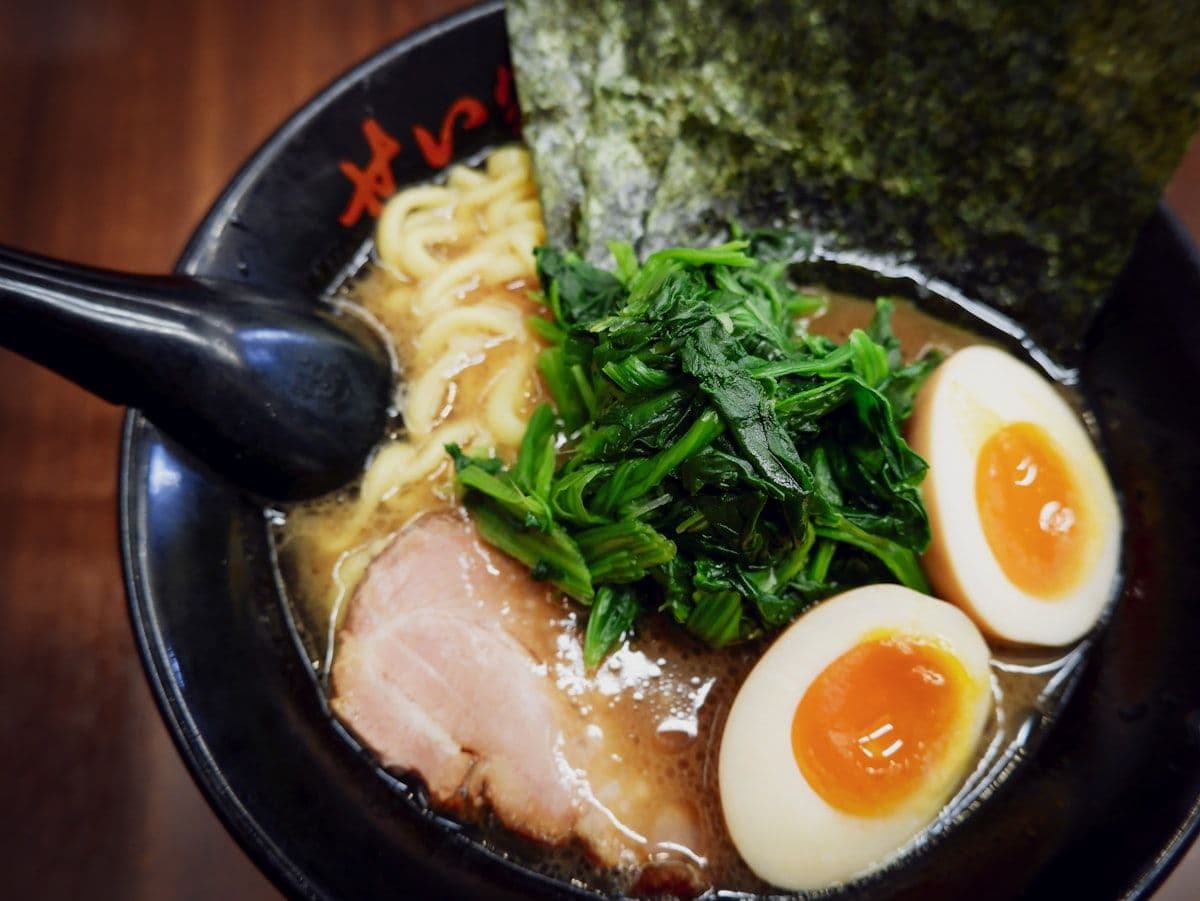
Two things set Kitakata ramen apart, and both reward a little attention before the first mouthful. The noodles come first. They are flat, broad, and noticeably thick, with a pronounced curl and a chewy, springy bite that holds up well in hot soup. Locals describe them with a phrase that doubles as a kind of pledge of quality: hira-uchi jukusei tajou men, roughly meaning flat, aged, multi-folded noodles.
The aging is the part that matters most. The dough is given time to rest and mature, which deepens its flavor and gives the noodles their characteristic elasticity. When the noodles arrive, they are slick and rippled, and they carry the broth in a way that thinner, straighter noodles cannot. This is the texture that defines the style, and it is the first thing a returning visitor notices.
A Clear, Restrained Broth
If the noodles are assertive, the soup is the opposite. Kitakata ramen is built on a light, clear soy-based broth, gently colored and rarely heavy. The base is typically drawn from pork bones and niboshi, the small dried sardines that give so much of northern Japanese cooking its quiet, savory backbone. The result is a soup that is clean rather than rich, restrained rather than insistent, and well suited to the early hour at which it is so often eaten.
Toppings tend to be modest and traditional. A few slices of chashu pork, some menma bamboo shoots, a scattering of green onion, and often a sheet or two of nori are the usual order of things. There is little here that shouts for attention. The pleasure of a good bowl of Kitakata ramen lies in balance: the chew of the aged noodles against the lightness of the broth, eaten slowly, without fuss.
Asa-Ra: The Breakfast-Ramen Tradition
The most surprising thing about ramen in this city is when it is eaten. Kitakata is the home of asa-ra, a contraction of the words for morning and ramen, and the practice is exactly what it sounds like: a bowl of noodles for breakfast. Many shops open early, some well before most cafes elsewhere in Japan would consider turning on the lights, and a morning crowd is a normal sight rather than an eccentric one.
The origins of the custom are usually traced to the rhythms of an agricultural and craft-working town. Farmers and tradespeople who began their days early wanted something warm, filling, and quick, and the noodle shops obliged. Over time the habit settled into local life and then, as the city's ramen grew famous, into local identity. Today asa-ra is promoted openly as part of what makes Kitakata worth visiting, and eating ramen at eight in the morning is treated not as a novelty but as the correct way to do things.
Food & Sake
What to Eat in Tohoku: The 12 Dishes That Define the Region
Tohoku's food is the most distinct in Japan — shaped by altitude, cold, and isolation. These are the 12 dishes that define the region.
For a traveler, the appeal is real and not merely curious. The light, clear broth of Kitakata ramen sits comfortably at breakfast in a way that a heavier, fattier bowl never could. Arriving early also means shorter lines at the better-known shops and a chance to watch the town wake up around its noodles. It is one of the few places in Japan where ordering ramen with the morning light is the local thing to do.
The Old Shops and the Shape of the Scene
Kitakata's reputation did not appear overnight. The city is often cited as having one of the highest ratios of ramen shops to residents anywhere in Japan, with somewhere around a hundred and twenty establishments serving a population that is comparatively small. The concentration means that ramen is woven into ordinary daily life rather than reserved for special occasions, and it gives visitors an unusual range of choices within a short walk or drive.
Several of the shops are long-established institutions, some run by families across multiple generations, and the oldest among them are part of how the modern style came to be codified. These older houses are spoken of with genuine affection by locals, and a number of them still draw lines despite their age. Rather than chasing a single famous name, many visitors find it more rewarding to try two or three bowls across a morning and afternoon, comparing how different kitchens handle the same fundamentals of aged noodle and clear broth.
Prices and opening hours shift over time and vary from shop to shop, so it is wise to confirm details locally rather than relying on old information. What stays constant is the underlying character of the food. Even between very different establishments, the family resemblance of Kitakata ramen is unmistakable, and that consistency is part of what makes the town a destination in its own right.
Kura Storehouses and the Sake Town Around the Noodles
It would be a mistake to treat Kitakata as a place to eat and nothing more. The same prosperity that supported its dense network of noodle shops also left the city with one of Japan's most distinctive built landscapes. Kitakata is famous for its kura, the thick-walled traditional storehouses that line its streets in unusual numbers. Built to store goods, brew sake, and signal a household's standing, these handsome structures give the town a settled, historic texture that pairs naturally with an unhurried morning of ramen.
Sake is the other thread running through the city. Kitakata has long been a brewing town, drawing on the clean water and good rice of the Aizu region, and several breweries remain active. A few welcome visitors, and a tasting makes a fitting counterpoint to a bowl of noodles. The connection is not incidental: the same craft sensibility that produces patiently aged noodles and patiently brewed sake runs through the whole place, and spending a day here means moving easily between the two.
Walking the kura-lined streets between meals is the best way to take the measure of Kitakata. The town is compact and largely flat, its older quarters are easily explored on foot, and the rhythm of strolling, eating, and pausing at a brewery suits the city's temperament. This is a place built for lingering, not for rushing.
Getting There and Practical Tips
Kitakata sits in the Aizu area of western Fukushima, and most travelers reach it by way of Aizu-Wakamatsu, the larger and better-connected city to the south. From Aizu-Wakamatsu, the Banetsu West Line carries passengers north to Kitakata in a short, scenic run through the basin. Aizu-Wakamatsu itself is reachable from the shinkansen network and makes a sensible base for those who want to combine the ramen town with the castle, samurai history, and hot springs of the wider Aizu region.
A few practical points improve the visit. Arriving in the morning is the obvious advice, both to honor the asa-ra tradition and to beat the queues at popular shops. Cash remains useful at smaller, older establishments, even as card payment spreads. Hours can be early and sometimes short, with some shops closing once the day's broth runs out, so flexibility and an early start serve a visitor well.
Finally, it is worth approaching Kitakata with a little patience and an empty stomach. The food here is not designed to overwhelm, and a single bowl may seem deceptively simple. Its quality reveals itself across the morning, in the contrast between one shop and the next, and in the small, satisfying ritual of eating noodles while the town is still quiet. Taken that way, the city earns its place among Japan's great ramen towns with ease.
Frequently Asked Questions
What makes Kitakata ramen different from other regional styles?
The defining features are the noodles and the broth. Kitakata ramen uses flat, thick, curly noodles that are aged before cooking, giving them a chewy, springy texture, and it pairs them with a light, clear soy-based soup commonly built from pork and dried sardines. Compared with the rich miso ramen of Sapporo or the heavy pork-bone tonkotsu of Hakata, Kitakata's bowl is notably restrained and clean.
What is asa-ra and why do people eat ramen for breakfast in Kitakata?
Asa-ra is the local custom of eating ramen in the morning. The habit is usually traced to a working town where early-rising farmers and craftspeople wanted a warm, filling meal at the start of the day. Because Kitakata's broth is light rather than heavy, it suits breakfast comfortably, and many shops open early specifically to serve the morning crowd.
How do you get to Kitakata?
Most visitors travel via Aizu-Wakamatsu in western Fukushima and then take the Banetsu West Line a short distance north to Kitakata. Aizu-Wakamatsu connects to the wider rail network and works well as a base for exploring both the ramen town and the surrounding Aizu region.
Is there anything to do in Kitakata besides eating ramen?
Yes. Kitakata is known for its kura, the traditional storehouses that line its streets in unusual numbers and give the town its historic character. It is also a sake-brewing town, and several breweries remain active, some of which welcome visitors. Walking the compact old quarters between meals, with a brewery stop along the way, is a natural part of the experience.