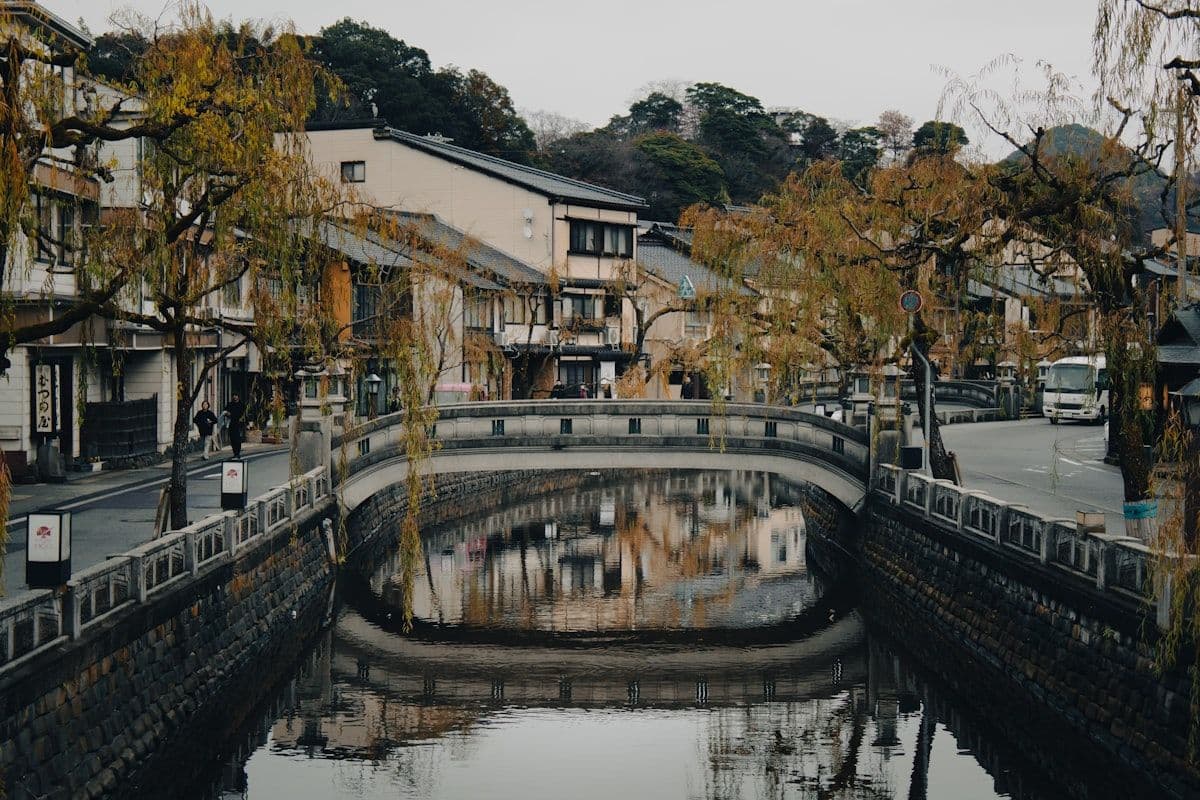
Onsen— winter
Ginzan Onsen: Japan's Most Beautiful Winter Village
May 5, 2026
In a narrow Yamagata gorge, gas lanterns reflect off fresh snow and wooden ryokan lean over a rushing river. Ginzan Onsen exists at the precise intersection of beauty and impermanence — a place that feels like it might disappear the moment you stop looking.
The bus from Oishida station takes forty minutes through increasingly bare mountain roads. As you descend into the gorge, the landscape contracts. The sky narrows. Then the village appears: a handful of Taisho-era wooden ryokan stacked along a river, their windows glowing amber in the grey afternoon. If you arrive in winter, there will be snow on every surface. The gas lanterns will already be lit.
A Village Unchanged
Ginzan Onsen — Silver Mountain Hot Springs — takes its name from the silver mines that once operated in these hills during the Edo period. When the mines closed, the hot springs remained. The ryokan that line the Ginzan River today were built largely in the 1920s, after a flood destroyed earlier structures. They have not changed much since. No convenience stores. No traffic. No noise beyond the river and the occasional creak of old timber.
The hot spring water here is sodium chloride — warming in a way that goes deeper than temperature. After an evening in the rotenburo, the outdoor bath, guests often report a kind of pleasant disorientation: time has passed, but it is impossible to say how much. This is the specific quality of the best onsen towns. They loosen the grip of the clock.
The Right Way to Stay
There are roughly ten ryokan in Ginzan Onsen. The most celebrated is Fujiya, a five-storey wooden structure that has appeared in nearly every Japanese magazine that has ever featured the village. Designed by architect Kengo Kuma's office, its renovation preserved the Taisho-era exterior while adding a restraint and refinement to the interiors that suits the village's mood. Book at least three months in advance for winter weekends.
Every room rate includes dinner and breakfast — kaiseki meals assembled from local mountain vegetables, river fish, and Yamagata wagyu. The sake selection is predictably excellent. Some ryokan will arrange a private bath booking so that guests can soak in silence without sharing the space. This is worth requesting.
When to Go
Every season reveals a different village. Spring brings cherry blossoms. Autumn turns the gorge walls gold and red. Summer offers cool air against a hot mineral soak. But winter is the reason to come. From December through March, snow transforms Ginzan Onsen into something that requires no filter, no caption, no explanation. It simply is what it is: the most beautiful small place in Japan.